South Africa LED Lighting and Smart Lighting Industry: Electronics Assembly and SMT Manufacturing Solutions

LED lighting and smart lighting are attractive South African manufacturing categories because they combine large installed demand, repeat replacement cycles, and a growing need for local configuration. The pillar article on South Africa manufacturing outlook explains the country-level case; this article narrows the opportunity to lighting electronics that can actually be built on an SMT line.
The important point is that LED lighting is no longer only about a lamp body. It includes driver boards, dimming logic, thermal management, sensors, and sometimes wireless control. That is where local assembly can capture real value.
- Why LED and Smart Lighting Matter in South Africa
- Which Lighting Boards Are Most Suitable for Local Assembly
- What an SMT Line Must Do Well for Lighting Products
- How Smart Lighting Changes the Business Model
- How to Design the Production Line
- How I.C.T Supports LED and Smart Lighting Projects
- South Africa Lighting Production Scenarios
- Quality Controls That Protect Lighting Profit
- A Practical Investment Model for Lighting Electronics
Why LED and Smart Lighting Matter in South Africa
Lighting is a volume market with real repair and replacement demand
South African lighting demand comes from homes, commercial buildings, retail chains, industrial facilities, public spaces, and energy-saving retrofits. That means the market is not one-off. It renews itself through replacement, upgrade, and project work.
For electronics manufacturers, that is useful because volume is only part of the story. The more valuable part is repeatability: a board family that can be reproduced, repaired, and variant-managed locally.
Smart lighting increases the local content opportunity
When lighting becomes connected or sensor-driven, the product needs more electronics around it: power control, dimming, scheduling, occupancy logic, communications, and energy management. That makes the category much closer to the SMT lines used in other electronics sectors.
This is why smart lighting fits South Africa’s industrial upgrading story. It is a practical entry point where local PCB assembly can support a visible customer need without requiring a completely new industrial base.
Which Lighting Boards Are Most Suitable for Local Assembly
Driver boards and control boards are the strongest starts
The most practical local products are LED driver PCBs, dimmer boards, sensor interfaces, power control boards, and smart lighting gateway modules. These parts benefit from local assembly because they need consistent quality and fast revision handling.
A factory can start with a narrow family and then extend into related lighting controls. That reduces process risk and keeps the line easier to qualify.
Thermal design is not optional in lighting electronics
LED products create heat, and heat is the first enemy of yield and field life. The SMT process must therefore support reliable soldering, good component placement, and board protection where needed.
If the thermal design is weak, the product will fail later in the field. That is why lighting electronics should be treated as a reliability project, not a decoration product.
What an SMT Line Must Do Well for Lighting Products
The line should support compact boards, mixed parts, and stable thermal control
Lighting boards are often dense but compact. They combine connectors, LEDs, resistors, control ICs, and sometimes power components. That means the line needs stable printing, accurate placement, and reflow control that protects both small and thermally sensitive parts.
A good LED line is not only about speed. It is about repeating the same result across thousands of boards without creating heat-related defects or placement drift.
Lighting factories can also benchmark energy device SMT lines, factory equipment planning, and inspection-driven quality.
Inspection and protection have a bigger role than many buyers expect
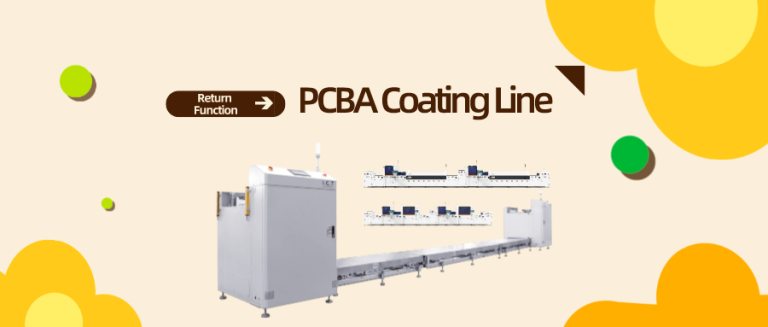
Because lighting often lives in hot or exposed environments, the line may need stronger AOI, coating, and final test control. A defect that slips into a light fitting becomes a service call, an installation delay, or a warranty claim.
That is why the production system should treat coating and inspection as part of the product promise. The AOI layer and the coating layer are often more important than a simple speed benchmark.

How Smart Lighting Changes the Business Model
Connected lighting adds software, traceability, and service value
Once lighting becomes smart, the buyer expects setup, control, and support. That can include scheduling, dimming, occupancy response, gateway communication, and energy usage visibility. Those features raise the value of the PCB and the need for disciplined manufacturing.
The factory can then support not only light hardware, but also the electronics behind the user experience. That is where local assembly becomes more strategic than simple import substitution.
The service model matters as much as the board
Smart lighting projects often require replacement boards, firmware support, or configuration changes after installation. A local factory can respond faster than an offshore supplier and keep the customer from waiting on long lead times.
This service logic is exactly why the sector deserves its own SMT plan rather than a generic electronics plan.

How to Design the Production Line
Start with a balanced LED line and then add specialization
A practical starting line can include printing, placement, reflow, AOI, coating, and final test. If the product mix is narrow, that may be enough to launch quickly. If the product mix becomes broader, the factory can add traceability and buffering without changing the core logic.
The key is to keep the line balanced around board family and batch size. Overbuilding one station creates hidden cost elsewhere.
Layout should protect heat-sensitive parts and product flow
Lighting boards are easier to damage if the layout is poor or if boards wait too long between stations. A compact, clear flow helps the factory keep thermal exposure, handling errors, and line confusion under control.
That is why the line should be arranged for repeatability first and only then for maximum output.
How I.C.T Supports LED and Smart Lighting Projects
The equipment stack should match the board family
I.C.T can help map the LED board family to the right printer, placement platform, reflow profile, inspection, and coating plan. The goal is not to sell more machines. The goal is to create a line that produces a stable lighting product with fewer service risks.
For a lighting factory, the strongest starting stack often includes an LED solder printer, advanced reflow oven solution, and online AOI inspection matched to the board family.
The business case is stronger when the line can scale
A lighting plant should be able to begin with one product family, prove yield, and then add smart controls or adjacent board variants later. That keeps the capital plan disciplined and avoids building an oversized line too early.
South Africa’s industrial policy and clean-technology direction support that kind of phased manufacturing.
South Africa Lighting Production Scenarios
Commercial retrofits need variants, not only one standard board
A commercial lighting project in South Africa may use one family of driver boards across offices, warehouses, retail areas, and outdoor fixtures, but the electrical load, enclosure, connector position, and control interface can change from project to project. This is where local SMT capability becomes useful. The factory can keep the core circuit platform stable while adapting BOM variants, connector choices, and firmware-related control boards for each customer program.
For the SMT line, this means changeover discipline matters more than a simple daily output number. Feeders, stencil control, solder paste storage, and first-article verification should be organized so a team can switch between several lighting board variants without losing traceability. If the factory treats every variant like a new project, cost rises quickly. If it builds a controlled board-family system, the same line can serve multiple retrofit customers with fewer engineering surprises.
Industrial lighting needs stronger protection against field conditions
Industrial and outdoor lighting boards face heat, dust, vibration, power fluctuation, and sometimes moisture. A cheaper assembly process may pass a simple power-on test but fail after installation. That failure is expensive because replacing a fixture in a warehouse, mine-support environment, parking area, or public facility costs far more than fixing the PCB during production.
A South African lighting factory should therefore define which boards need conformal coating, which need stronger AOI criteria, and which need burn-in or functional testing. This does not mean every product needs the most expensive process. It means the process should match the environment. Indoor commercial drivers, smart control modules, and outdoor high-power boards should not be treated as if they carry the same risk.
Quality Controls That Protect Lighting Profit
Solder paste and reflow control decide early yield
LED driver boards often combine small control components with power devices and connectors. This mix creates uneven heat absorption during reflow. If the profile is too aggressive, small parts and sensitive ICs can be damaged. If the profile is too weak, heavier joints may become unreliable. The factory needs a repeatable profile, not a one-time setting that only works during trial production.
The practical control point is to connect stencil design, paste choice, placement stability, and reflow profile into one quality loop. When defects appear, the team should know whether the cause is print volume, placement offset, component thermal mass, or board design. Without that discipline, operators may keep adjusting the wrong station and create a moving target for every batch.
Traceability helps lighting makers manage warranty risk
Lighting products can be shipped into many sites, and failures may return months later with limited field information. Traceability gives the manufacturer a way to connect a returned board to batch, material lot, reflow profile, operator shift, and inspection record. That information helps separate a design issue from a process issue or an installation problem.
For growing South African lighting brands, this is not only a factory tool. It is a customer-service tool. A company that can explain root cause and corrective action looks more reliable to contractors and facility owners. That can be the difference between being a low-price assembler and becoming a long-term lighting electronics supplier.
A Practical Investment Model for Lighting Electronics
Start with board families that can share materials and process settings
The strongest lighting electronics projects are not built around isolated SKUs. They are built around board families that share many components, stencil rules, test methods, and reflow behavior. A South African manufacturer can use this approach to reduce inventory risk while still offering product variants for commercial, industrial, and outdoor lighting customers.
This also makes quoting more accurate. When the engineering team understands how many boards share the same feeder setup, paste type, coating rule, and test method, it can price each project with fewer hidden assumptions. That is important in a market where customers may compare imported finished products against locally assembled electronics.
Use service response as part of the business case
Local LED and smart lighting production is strongest when the customer values response time. Replacement boards, design adjustments, connector changes, and urgent project support are all easier when the manufacturer is close to the market. This service advantage should be included in the investment case, not treated as a side benefit.
For many lighting brands, the first SMT line may not win only by matching import price. It wins when it reduces project delays, supports warranty investigation, and allows a faster move from prototype to installed product. Those are practical advantages that a local electronics factory can turn into long-term accounts.
Planning LED or Smart Lighting Production in South Africa?
Share the lighting board family and target output. I.C.T can help design a line that balances thermal control, inspection, and future scale-up.
Frequently Asked Questions
LED lighting manufacturing needs SMT because LED boards, drivers, sensors, dimming modules, and smart controllers require repeatable placement and soldering. Manual assembly can work for prototypes, but it becomes inconsistent as volume and component density increase. SMT helps South African lighting factories improve yield, support product variants, and build lighting electronics for indoor, outdoor, industrial, solar, and smart lighting applications. Ask the supplier to prove this support plan against the actual factory layout and boards.
Important equipment includes a suitable solder paste printer, pick-and-place machine, reflow oven, AOI, conveyors, loaders, unloaders, and depaneling equipment when boards are long or panelized. LED boards may need strong board support, careful thermal profiling, and inspection for polarity and solder defects. The line should be selected by board length, LED package type, driver design, product variation, and expected future smart-lighting functions. Ask the supplier to prove this support plan against the actual factory layout and boards.
Reflow should be controlled by matching the thermal profile to LED package sensitivity, board material, copper distribution, solder paste, and driver components. Excessive heat can damage LEDs or shorten reliability, while insufficient heat can create weak solder joints. South African lighting factories should keep approved profiles and review AOI defect trends. Stable reflow is especially important for outdoor, industrial, and solar lighting exposed to harsh conditions. Confirm the control point during pilot builds before releasing regular customer production.
Important checks include LED polarity, missing components, solder bridges, insufficient solder, alignment, driver component placement, communication module function, dimming control, and final lighting performance. AOI can catch many visible assembly defects, while functional tests confirm electrical behavior. For outdoor or industrial lighting, coating, thermal management, and moisture protection may also matter. The factory should define inspection gates before scaling production. Confirm the control point during pilot builds before releasing regular customer production.
Lighting manufacturers can start safely by choosing one or two stable product families, validating panel design, preparing stencils, setting reflow profiles, and training operators before mass production. Pilot runs should measure solder defects, polarity issues, and functional-test results. A phased line can begin with core SMT equipment and add traceability, coating, depaneling, or automation as product volume and smart-lighting complexity grow. Ask the supplier to prove this support plan against the actual factory layout and boards.