Complete Guide to PCB Traceability Systems: How SMT Automated Labeling Enables Smart Electronics Manufacturing

A reliable SMT traceability machine solution does more than print a code on a circuit board. It creates a controlled identity for each PCB, connects that identity with the manufacturing steps that follow, and gives production, quality, service, and customers a defensible record of what happened. In practical terms, a PCB Traceability System combines board identification, automated labeling or marking, code reading, process records, inspection results, and a software layer that can retrieve the history later.
That distinction matters because a label without a data process is only an appearance of traceability. A complete PCB Tracking System must answer which board was built, from which material and program, on which line, under which process conditions, with which inspection results, and what disposition was made when an exception occurred. This guide explains how SMT automated labeling supports that chain, how to choose between labels, inkjet codes, and laser marking, how to connect the line to MES, and how a factory should validate the design before purchasing equipment.
Table of Contents
- What a PCB Traceability System Really Controls
- Why PCB Traceability Matters in Smart Electronics Manufacturing
- PCB Identity, Serialization, and Code Strategy
- How SMT Automated Labeling Works in the Production Flow
- Labels, Inkjet, and Laser: Choosing the Right Marking Method
- MES Traceability Solution and Data Architecture
- Quality Control, Exceptions, and Recall Readiness
- Implementation Roadmap for a PCB Tracking System
- Buyer Checklist for Equipment and Supplier Evaluation
- FAQ
What a PCB Traceability System Really Controls
Traceability begins with a controlled identity
A PCB Traceability System starts by assigning an identity that the factory can create once, read repeatedly, and associate with every authorized production event. Depending on the product and process, that identity may be represented by a 1D barcode, a 2D Data Matrix or QR-style code, a printed label, an inkjet mark, a laser mark, or a combination of a human-readable serial number and machine-readable data. The important design question is not which symbol looks most advanced. It is whether the identity remains readable after the board passes through handling, soldering, cleaning, coating, testing, and shipment.
Serialization also needs ownership. The serial number may be generated by an MES, an enterprise resource planning system, a line controller, or a controlled local application. A buyer should define which system is authoritative, how a number is reserved, how duplicate numbers are prevented, and what happens when a board is rejected after a label has already been printed. Without those rules, operators can create duplicate identities, skip a failed board, or reprint a label without preserving the event history.
Separate the board, panel, and product identities
Many traceability projects become confusing because the factory has several identities at the same time. A panel can have one code, each individual PCB can have its own serial number, and the finished product can later receive another assembly or shipment identifier. The system should define parent-child relationships between those objects. If one panel is separated into several boards, the records should show which child boards came from that parent. If multiple boards are assembled into a higher-level unit, the next process should be able to associate those children with the final assembly.
This is also where the PCB Tracking System meets physical handling. The code must be placed where readers can see it, but it must not interfere with components, solder joints, fiducials, test points, thermal paths, conformal coating boundaries, or customer-visible surfaces. A traceability engineer should review the board drawing, panel layout, keep-out areas, label size, code contrast, and downstream orientation before deciding the exact marking location.
Define the minimum record before adding more data
A useful record is not necessarily the largest record. At minimum, a factory may need the PCB serial number, product and revision, work order, line or station, program revision, material or lot references, operator or shift context where applicable, inspection status, rework status, and final disposition. Additional information can be valuable, but only if it is accurate, time-synchronized, searchable, and governed. Collecting large quantities of unvalidated data creates the impression of a Smart Factory Traceability system without making troubleshooting faster.
Reviewed by I.C.T Engineer: Start the design with the decisions the factory must make during a quality event. If the team cannot explain which record would prove a board passed a specific step, the traceability scope is not yet complete.
Why PCB Traceability Matters in Smart Electronics Manufacturing

Reduce the size of a quality investigation
When a defect is discovered, the value of traceability is measured by how quickly the factory can identify the affected population and separate known-good boards from boards that require review. Without a stable board identity, the response may depend on paper travelers, memory, pallet position, or a broad date range. That usually creates unnecessary inspection and may force a factory to hold more product than the actual risk requires. A working traceability record helps the team narrow the investigation to a product revision, time window, material lot, machine program, process step, or serial-number range.
Traceability does not automatically prove that a process was good. It provides the structure needed to connect a board to evidence. The evidence still depends on calibrated equipment, correct inspection rules, controlled recipes, and reliable data capture. A board code can tell the system which board is being examined; it cannot compensate for a reader that was never checked or a process result that was stored against the wrong identifier.
Support customer communication and service history
Industrial, automotive-adjacent, medical, energy, and other reliability-sensitive products often require more than a final pass or fail. Production and service teams may need to understand the board revision, component or material history, test result, rework activity, and shipment context. A PCB Serialization System creates a durable bridge between the factory and the field. It can support controlled service decisions, engineering feedback, and evidence-based communication when a customer asks about a particular unit.
The level of information should match the product risk and contractual requirement. A low-risk consumer board and a safety-related control board may not need the same record depth, retention period, or approval flow. Buyers should therefore avoid copying a large traceability specification from another industry. The right scope is the smallest controlled system that can satisfy actual quality, regulatory, customer, and internal decision needs.
Improve process discipline without turning operators into data clerks
A Smart Factory Traceability system should make the correct action easier at the station. The operator scans or receives the board identity, the system validates the product and program, the machine performs the intended operation, and the result is stored automatically. If the board is not recognized, the wrong recipe is selected, or a code cannot be read, the line should stop or route the exception according to a visible rule. This is more reliable than asking operators to type serial numbers, copy results into spreadsheets, and reconcile records at the end of a shift.
Good process design also reduces duplicate work. The same identity can be used by label application, code reading, AOI, test, repair, packing, and shipment systems when the interfaces are planned correctly. That does not mean every machine must be replaced. It means the factory should decide where a record is created, where it is verified, and which systems are allowed to update its state.
PCB Identity, Serialization, and Code Strategy
Choose the data carrier from the entire product life cycle
Code selection should follow the board’s real life cycle. A label may offer a flexible and visible surface, while direct inkjet or laser marking can remove the risk of a separate label becoming detached. A 2D code can hold more data in a compact area than a traditional linear barcode, but the symbol still needs sufficient contrast, quiet zone, print quality, and reader access. A human-readable serial number can help people during inspection and service, but it should support the machine-readable identity rather than replace it.
Ask what the board will experience after marking. Will it go through reflow, wave soldering, cleaning chemistry, conformal coating, high-temperature exposure, mechanical handling, or a test fixture that touches the marked area? Will the customer need to scan the code after enclosure assembly? Will a field technician use a handheld reader under less controlled lighting? These questions determine material, adhesive, ink, laser contrast, placement, and verification requirements.
Design the serialization rules before selecting hardware
The serial format should be predictable and governed. Define the prefix, product family, revision handling, date or lot information if needed, sequence range, check character rules, and duplicate prevention. Do not place confidential information in the code merely because the symbol can hold it. In many systems, a short unique identifier is safer and more flexible when the rest of the product record stays in the database.
Exception handling is equally important. If a board receives an unreadable label, the system should not silently create a second identity. It should record the failed attempt, quarantine or route the board, authorize a reprint or re-mark, and keep the relationship between the old and new physical mark. If a board is reworked, the same serial number may remain with a new process state, or the factory may create a controlled revision event. The correct choice depends on product policy, but it must be explicit.
Validate code quality at the point of application
Printing is not verification. A PCB Tracking System needs a reader or inspection step that confirms the code can be decoded and that the decoded value is the one expected for that board. The system should distinguish at least three conditions: the code cannot be read, the code is readable but wrong, and the code is correct and accepted. Those conditions have different recovery paths and should not be collapsed into a generic alarm.
For factories that need an integrated line decision, the SMT label mounter for PCB traceability can be evaluated as part of a larger identity workflow. The buyer should validate real boards, real label stock, the actual code size, and the planned reader position instead of approving the machine from a brochure image alone.
How SMT Automated Labeling Works in the Production Flow
Place the identity where it can be created and controlled
SMT automated labeling usually sits at a point where the board can be presented in a known orientation and the serial information can be synchronized with the production system. In an inline process, a loader, conveyor, label mounter, printer, scanner, or related station may communicate with upstream and downstream equipment. The exact arrangement depends on whether the PCB is bare, partially assembled, or already populated, and whether the mark must be applied before or after a process that could damage it.
The station needs more than a label applicator. It needs board detection, orientation control, code or work-order input, label or marking material control, application confirmation, and a result message. If the process is automated but the identity is still typed manually, the main source of risk has not been removed. A strong sequence is: identify the board, validate the job, generate or retrieve the serial, apply the mark, read it back, store the result, and release the board only when the result is accepted.
Connect labeling to line balance and material flow
An automated label station can become a new bottleneck when it is specified without considering board spacing, changeover, replenishment, code generation time, reader response, and downstream buffer capacity. The line should be evaluated at the real board mix rather than at a single ideal cycle. High-mix factories may need quick label-roll changes, recipe control, and a clear procedure for different label sizes. Stable high-volume lines may prioritize continuous feed, recovery time, and integration with the existing conveyor network.
For an inline configuration, a buyer can compare the inline PCB label mounter configuration against the factory’s board dimensions, line height, product changeover frequency, and traceability software interface. The correct question is not only whether a machine can apply a label. It is whether the complete station can preserve identity through normal production, jams, reprints, recipe changes, and maintenance.
Use operator interaction as a controlled exception path
Even a highly automated process will encounter empty label stock, skewed boards, damaged labels, missing serial ranges, unreadable codes, and engineering changes. The operator interface should show what happened, what the safe next action is, and whether authorization is required. For example, a failed read may require the board to move to a hold position instead of returning to the line. A label replenishment event may need a material lot record. A reprint may need a reason code and supervisor approval.
Automation is strongest when normal work is automatic and abnormal work is visible. The system should not hide exceptions to protect an output counter. A board that bypasses the identity step may still move physically, but it should not become an accepted product until the traceability record is repaired according to the factory’s quality procedure.
Need help mapping automated labeling into your SMT line?
Share your PCB dimensions, product mix, code type, marking location, current MES or line-control method, and target output. I.C.T can help define a traceability station that fits the real process and the real exceptions.
Talk With I.C.T EngineerLabels, Inkjet, and Laser: Choosing the Right Marking Method

Use labels when flexibility and visibility are priorities
Labels are often attractive because they can be changed without changing the board surface, can carry both a machine-readable symbol and human-readable text, and can support multiple product formats. They are useful when a factory needs different serial formats, when the available board surface is limited, or when the marking location has not been permanently defined in the PCB design. Their weaknesses are also clear: adhesive and label stock must survive the product life cycle, application must be consistent, and a detached or damaged label can break the identity chain.
Label selection should include adhesive compatibility, surface cleanliness, temperature exposure, chemical exposure, label thickness, edge clearance, winding direction, and storage conditions. The application process should also be checked for wrinkles, bubbles, skew, incomplete adhesion, and placement over a solder mask boundary or component. A label that reads correctly on day one may still be a poor choice if it lifts during cleaning or becomes inaccessible after enclosure assembly.
Use inkjet when direct, flexible marking is valuable
Inkjet marking can provide direct printing on an appropriate PCB surface without a separate label substrate. It may be useful when the board surface, ink system, contrast, drying behavior, and downstream process are well controlled. The buyer should evaluate the printed character and code under actual line lighting, the required dry time, the risk of smearing, and whether the mark remains readable after later processing.
The QR code and barcode inkjet printer should be assessed as a data-and-verification station rather than a stand-alone printer. Ask how the expected serial is transferred, how the printed result is read back, how an incorrect code is stopped, and how ink replenishment or print-head maintenance affects the traceability record. A direct mark can be a strong option, but only when the surface and process conditions support stable readability.
Use laser marking when permanence and low consumables matter
Laser marking can create a durable direct mark with fewer consumable materials than a label process. It may suit products where the identity must remain with the PCB through long service life or where a label is difficult to protect. It still requires careful control of contrast, heat impact, board material, coating, dust or residue, safety interlocks, extraction, and the position of the mark relative to electrical and mechanical requirements.
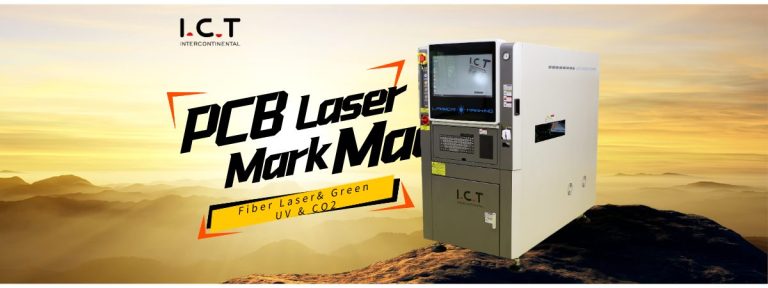
A multi-function PCB labeling and UV laser marking system may be relevant when a factory wants to compare or combine marking methods across products. The engineering review should define which boards need labels, which need direct marking, what code quality is required, and how the equipment handles product changeover. The best choice is often a product-family decision rather than a single method imposed on every PCB.
MES Traceability Solution and Data Architecture

Give each system a clear responsibility
An MES Traceability Solution works when each system has a defined role. The MES may own work orders, routing, serial state, process authorization, and the central history. A line controller may manage equipment handshakes and station timing. The labeling or marking machine may execute the physical application and return the result. An inspection system may add pass, fail, measurement, and image references. ERP may own order and material context. These roles can vary, but the handoffs must be documented.
Before integration, map the messages for a normal board and for every important exception. At minimum, define the request for an identity, the response containing the authorized serial, the job or recipe validation, the mark result, the code-read result, the process completion result, and the rejection or hold state. Also define what happens if the network is unavailable. A local queue may be acceptable for some operations, while other products may require the line to stop rather than continue without central authorization.
Capture process results against the correct serial
The biggest data risk is not always missing information. It is correct-looking information attached to the wrong board. Board presence sensors, code readers, fixture control, and sequence rules can reduce this risk. The system should confirm that the physical board at the station matches the serial being updated. If a board is removed and replaced, the station should not assume the original identity is still present.
Time synchronization also matters. A process record with inconsistent clocks can make a sequence appear impossible and complicate investigation. Use a controlled time source where practical, and record the station, machine, program, and result state with enough context to distinguish a production event from a manual correction. A traceability database should preserve history rather than overwrite a failed result with only the latest pass.
Design for useful retrieval, not only data storage
A factory should test traceability queries before approving the project. Can quality retrieve all boards built under a specific program revision? Can engineering find the material lots associated with a serial range? Can service locate the test history of one unit? Can production identify boards waiting for rework? Can an authorized user see who changed a disposition and why? These questions reveal whether the system is operationally useful.
Retention and access rules should be aligned with customer and company requirements. Sensitive supplier, employee, or product information should be protected, and user permissions should distinguish viewing, disposition, reprint, and system-administration actions. Traceability is partly a manufacturing technology project and partly a data-governance project. The equipment will be more reliable when the records it creates have clear ownership.
Quality Control, Exceptions, and Recall Readiness
Make code verification a release decision
Every marking method needs a defined acceptance rule. The rule may cover decodability, contrast, position, character content, quiet zone, symbol grade, or a customer-specific requirement. Do not assume that a code reader and a code verifier provide the same level of control. A reader answers whether it can decode the symbol. A verifier may assess additional quality characteristics. The appropriate tool depends on the product and the risk.
Verification should occur close to the mark, but the factory may also need later checks after a process that could change readability. If a label passes application but becomes hidden by coating, the original check is not enough. If a laser mark is readable before cleaning but not afterward, the process window needs attention. The traceability plan should identify the earliest release point and the later checkpoints that protect the product’s intended life cycle.
Control rework, reprint, and scrap states
Rework is where weak systems often lose history. A board can be physically repaired while the database still says pass, or a reprinted label can make the board look new while the first failed attempt disappears. The system should store the event sequence: original application, failure reason, disposition, rework step, reprint authorization, verification result, and final release. Scrap should also be recorded so the serial cannot accidentally return to active production.
Parent-child relationships need the same discipline. If a panel is split, the system should know which children exist and what happened to each one. If a child is scrapped, the parent record should not continue to imply that every expected board was completed. These details may feel administrative during normal production, but they become important when a customer complaint or material containment event occurs.
Test the system with realistic failure scenarios
Factory acceptance should include more than a successful demonstration. Test an unreadable code, a wrong serial, a duplicate serial, an empty label roll, a network interruption, a board jam, a reprint, a board removed before confirmation, an operator restart, a recipe change, and a downstream rejection. Observe whether the machine stops, whether the correct message is stored, whether the operator knows the next action, and whether the board can be reconciled without manual database editing.
Recall readiness is a practical test. Give the team a sample material lot or process condition and ask them to identify the affected serial range, current location, disposition, and shipment status. Then reverse the query: start with a serial number and retrieve the material, line, program, inspection, rework, and release history. The exercise exposes missing fields faster than a generic claim that the system is connected.
Implementation Roadmap for a PCB Tracking System

Phase one: map the current physical and information flow
Document how boards enter the line, how they are identified today, where panelization changes the physical unit, which stations can read a code, and where records are created. Include manual work, offline work, repair loops, test, packing, and shipment. The map should show the actual path, including buffers and bypasses. A system designed from an ideal line diagram will usually fail at the first exception loop.
At the same time, list the data that already exists and the quality of that data. Some factories have machine logs but no stable board identity. Others have serial numbers but no trustworthy process association. The implementation should define what can be reused, what must be cleaned, and what needs a new control. This prevents the project from assuming that a legacy field is accurate simply because it is present.
Phase two: pilot one product family and one decision loop
A focused pilot can validate the identity, mark, read-back, MES handshake, and exception process before the entire plant is connected. Choose a product family that is important enough to expose real requirements but stable enough to support controlled testing. Use representative board materials, label stock, code sizes, line speeds, and operators. Record the results by scenario, not only by successful cycle.
The pilot should also test the user experience. A traceability process that requires too many screens, repeated manual entries, or unclear recovery instructions will create workarounds. Operators should be able to understand the normal sequence and the difference between a machine fault, a data fault, and a quality hold. Engineering and quality should be able to review the history without asking an administrator to reconstruct it.
Phase three: expand by risk and production value
After the pilot, expand to additional products and stations according to risk, volume, customer requirement, and integration value. Reuse the stable interface and acceptance tests, but do not assume that every product uses the same mark location, code size, recipe, or life-cycle requirement. Product families may need different labeling materials or a different sequence of process events.
Change control should cover the PCB revision, software version, equipment recipe, serialization rules, label format, marking location, and MES interface. A traceability project is never finished in the sense that the factory will never change. It is finished when the change process itself is controlled, testable, and visible in the record.
Buyer Checklist for Equipment and Supplier Evaluation

Ask for a board-specific technical demonstration
Request a demonstration using representative PCBs, panels, label stock, code formats, and marking locations. Confirm the board range, orientation, substrate surface, code size, label placement tolerance, reader position, and expected downstream conditions. Ask the supplier to show normal operation and controlled recovery from a failed read, label change, duplicate identity, and network interruption.
Do not accept a generic “supports traceability” statement as a complete specification. Traceability can mean a local counter, a printed label, a code reader, a machine log, or a full MES transaction. These are not equivalent. The buyer should write the required behavior in testable language: what input is accepted, what output is returned, what event is stored, what stops the line, and who can authorize a correction.
Evaluate integration, service, and lifecycle support
Equipment fit is only one part of the purchase. Review electrical and compressed-air requirements, line height, board handling, consumables, preventive maintenance, spare parts, software updates, remote support, training, and documentation. For a global factory, confirm how the supplier will support commissioning, interface debugging, recipe creation, and future product changes. The system should remain serviceable after the original project team has moved on.
Ask how backups, access rights, logs, and data exports are handled. If the traceability function depends on a local computer, identify the recovery procedure and the boundary between machine control and database administration. A buyer should also understand what happens when a printer, reader, label applicator, or laser source is unavailable. A resilient line has a controlled fallback or a clearly defined stop condition.
Use acceptance criteria that protect the factory’s real objective
Acceptance criteria should cover identity integrity, code readability, correct board-to-record association, output at the planned product mix, changeover, exception recovery, data retrieval, and operator training. Include a period of production-like running rather than approving the system after a handful of ideal boards. The test should demonstrate that the record remains correct when the line is busy, the product changes, and a board needs rework.
For buyers reviewing the market, the 2026 PCB labeling automation trends can help frame questions about automation, sustainability, consumables, and data integration. Trends are useful for forming a checklist, but the final decision should still be based on the factory’s boards, product life cycle, quality risks, and verified acceptance results.
A practical PCB serialization and traceability planning path should finish with a written boundary: which identity is created, where it is verified, which systems own the data, how failures are contained, and how the factory proves that a released board has a complete record. That boundary is more valuable than a long equipment list because it tells every department what the system is expected to protect.
Planning a PCB serialization or SMT traceability project?
Send your PCB files, product revisions, code requirements, current line layout, MES or ERP interface details, and traceability pain points. I.C.T can help scope an integrated SMT labeling and traceability solution around your production reality.
Talk With I.C.T EngineerFAQ About PCB Traceability Systems
Frequently Asked Questions
What Is A PCB Traceability System?
A PCB Traceability System assigns and verifies a unique board identity, then connects that identity with manufacturing, inspection, rework, and release records. It may use a label, barcode, 2D code, inkjet mark, or laser mark, but the physical mark is only one part of the solution. The system must also control serialization, prevent duplicates, associate the correct board with the correct data, manage exceptions, and provide useful history retrieval for production, quality, service, and customer response.
Should A Factory Use Labels, Inkjet, Or Laser Marking?
The best marking method depends on the PCB surface, product life cycle, code size, readability requirement, chemical and thermal exposure, and service needs. Labels offer flexibility and visible human-readable information. Inkjet can provide direct printing when ink and surface conditions are controlled. Laser marking can offer a durable direct mark with fewer consumables, but it requires review of contrast, heat impact, safety, and extraction. Validate each option with representative boards and downstream processes before selection.
How Does SMT Automated Labeling Connect To MES?
SMT automated labeling normally connects to MES through a controlled exchange of product, work-order, serial, recipe, application, and verification results. The MES or another authorized system may provide the serial, while the labeling station applies the mark, reads it back, and returns the result. The interface should define normal and failed transactions, duplicate prevention, network interruption behavior, reprint authorization, and the exact record stored against the physical board. Clear system responsibilities are more important than simply having a network connection.
What Should A PCB Tracking System Record?
A useful PCB Tracking System commonly records the board serial number, product and revision, work order, line or station, program revision, relevant material or lot references, code application and read-back result, inspection status, rework events, and final disposition. The exact scope should reflect product risk, customer requirements, and the factory’s investigation needs. More data is not automatically better. Records should be accurate, time-synchronized, searchable, access-controlled, and preserved through reprint, rework, scrap, and panel-splitting events.
How Can A Factory Validate A Traceability Equipment Purchase?
Validate the purchase with representative PCBs, panels, marking materials, code sizes, recipes, and production scenarios. Test correct marking, code verification, board-to-record association, changeover, label or ink replenishment, duplicate serials, unreadable codes, jams, network interruptions, reprints, rework, and final history retrieval. Acceptance should measure identity integrity and recovery behavior as well as cycle performance. A successful demonstration on ideal boards is not enough to prove that the system will protect quality during real production.