
Hanwha SMT Line vs JUKI SMT Line Cost and Value Analysis

Comparing Cost and Value of Hanwha vs JUKI SMT Lines
Analyze cost, performance, and value of Hanwha and JUKI SMT lines.
Features | Hanwha SMT Line | JUKI SMT Line |
|---|---|---|
Initial Investment Cost | Higher due to advanced tech and features | Lower, fits small to medium factories |
Operating Expenses | Low due to efficiency and smart software | Lower with simple, reliable machines |
Maintenance Ease | Smart alerts and modular parts simplify upkeep | Simple repairs, less training needed |
Placement Speed | Up to 78,000 parts per hour | Up to 90,000 parts per hour |
Placement Accuracy | ±25 to ±50 microns depending on model | ±0.035 to ±0.05 mm accuracy |
Flexibility | Handles wide component sizes, modular upgrades | Fast job changes, dual lane conveyors |
Reliability and Uptime | Smart tools prevent downtime, durable build | Simple design, strong parts reduce stops |
Support Network | Global centers, remote diagnostics, comprehensive training | Local warehouses, practical support, quick parts |
Total Cost of Ownership | Higher upfront, lower long-term with upgrades | Lower initial, steady depreciation and costs |
Suitability by Production Scale | Best for large, high-volume factories | Ideal for small to medium, flexible jobs |
Cost and value are crucial factors when selecting a Hanwha SMT Line or any SMT manufacturing line solution. Many consider the initial investment, operational expenses, and the longevity of each system. The Hanwha SMT Line is renowned for its intelligent pick-and-place capabilities and rapid processing speed. This SMT manufacturing line offers exceptional efficiency and adaptability to evolving production requirements. Evaluating pick-and-place speed, precision, and reliability helps determine which smt manufacturing line delivers the best value for surface mount technology production.
Key Takeaways
Hanwha SMT lines have fast and accurate pick-and-place machines. Their smart software helps big factories that need speed and precision.
JUKI SMT lines cost less at first and are easy to fix. They are good for small or medium factories that change products often.
Both Hanwha and JUKI machines work with many sizes and types of components. This helps factories make different products easily.
Hanwha SMT lines can be changed and upgraded as needed. This helps factories grow and adjust over time.
JUKI SMT lines are small and can be changed easily. They have two-lane conveyors for quick job changes and save space.
Both brands have good support teams that help fix problems fast. I.C.T can provide you with both online and local service support for Hanwha and JUKI.
Picking the best SMT line depends on your factory size, how much you make, how hard your products are to build, and your budget. This helps you get the most value.
I.C.T gives custom SMT line solutions and full support for factories. They do more than just pick-and-place to help with special needs.
Cost Comparison
Hanwha SMT Line Cost
Initial Investment
Hanwha SMT Line uses advanced technology and works very fast. The first cost is higher because it has smart machines and fast mounters. These SMT machines place parts quickly, so they make more products and stop delays. The price also pays for special software that helps plan and manage materials. When you buy Hanwha SMT Line, you get ovens with many zones and quick solder paste printers. These tools help the SMT assembly work well from start to finish. The first cost is more than some other brands, but you get better features and can grow your line later.
Operating Expenses
Hanwha SMT Line keeps running costs low by being efficient and reliable. The pick-and-place machines work with inspection systems to catch mistakes early. This means less fixing and less time stopped. Hanwha uses smart software to watch the line and fix problems before they get big. The machines move materials smoothly and waste less, so you save money. You get steady work and fewer stops, which lowers the cost for each product made.
Tip: Hanwha SMT Line’s built-in hardware and software help factories stay fast and save money over time.
Maintenance
Hanwha SMT Line makes maintenance easy with smart tools. The machines are built in parts, so fixing them is simple. Automatic alerts tell workers about problems before they get worse. This helps stop surprise breakdowns and keeps the machines working longer. Hanwha gives good support and spare parts, so you know what maintenance will cost.
JUKI SMT Line Cost
Initial Investment
JUKI SMT Line is good for people who want to spend less at first. The JUKI RS-1R SMT Line costs about $55,000, so it fits small or medium factories. JUKI has strong pick-and-place machines and printers for jobs that change often. The first cost pays for small machines that save space and are easy to set up. JUKI is a top pick for factories that want to save money and need easy-to-use machines.
Aspect | JUKI RS-1R SMT Line |
|---|---|
Approximate Initial Investment | Around $55,000 (list price) |
Maintenance | Simpler maintenance leading to slightly lower lifetime costs |
Operating Expenses | Implied to be lower due to simpler maintenance |
Suitability | Ideal for frequent product changeovers, mid-volume/high-mix jobs, and those seeking lower initial investment and easier maintenance |
Operating Expenses
JUKI SMT Line keeps costs down with strong and small machines. These machines do not break often, so you do not stop work much. JUKI pick-and-place machines can place up to 80,000 parts each hour. They are also very accurate. The small size means you use less space and less power. JUKI has a big support team, so you get help and parts fast. This keeps your costs steady.
Maintenance
JUKI SMT Line is easy and cheap to take care of. The small machines are easy to reach for repairs. Workers do not need special training, so you pay less for labor. JUKI gives good help and sends parts quickly, so repairs do not take long. Factories have fewer stops, so the total cost is lower than with other brands.
Note: JUKI is known for being easy to fix and very reliable, so it is a good choice for factories that want to save money.
SMT Performance
Speed and Accuracy
Hanwha SMT Line

Hanwha SMT lines work fast and place parts very accurately. The SM471 Plus is a high-precision mounter for busy factories. It can put down up to 78,000 parts each hour. It keeps the parts in the right spot every time. This helps factories make circuit boards quickly and with few mistakes.
Specification | SM471 Plus (Hanwha) |
|---|---|
78,000 CPH (optimum) | |
Placement Accuracy | ±40μm (chips) |
±50μm (BGA/QFP components) |
Hanwha machines use smart cameras and software to avoid errors. They can place both tiny chips and big parts well. Factories that need fast and careful work often pick Hanwha.
JUKI SMT Line

JUKI SMT lines are also quick and accurate. The RS-2 machine can place up to 50,000 parts per hour. It has an accuracy of ±0.035mm. JUKI uses better cameras to keep parts in the right place. This helps even when jobs change a lot. JUKI machines are good for factories that make many different things.
Brand/Model | Placement Speed (CPH) | Accuracy (mm) | Additional Notes |
|---|---|---|---|
JUKI RS-2 | 50,000 | ±0.035 | Upgraded vision, compact, flexible |
Hanwha SM481 Plus | 35,000 | Not stated | Robust handling, strong market presence |
JUKI machines keep a steady speed and accuracy. They are a good choice for factories that want to save money and get good results.
Flexibility
Component Range
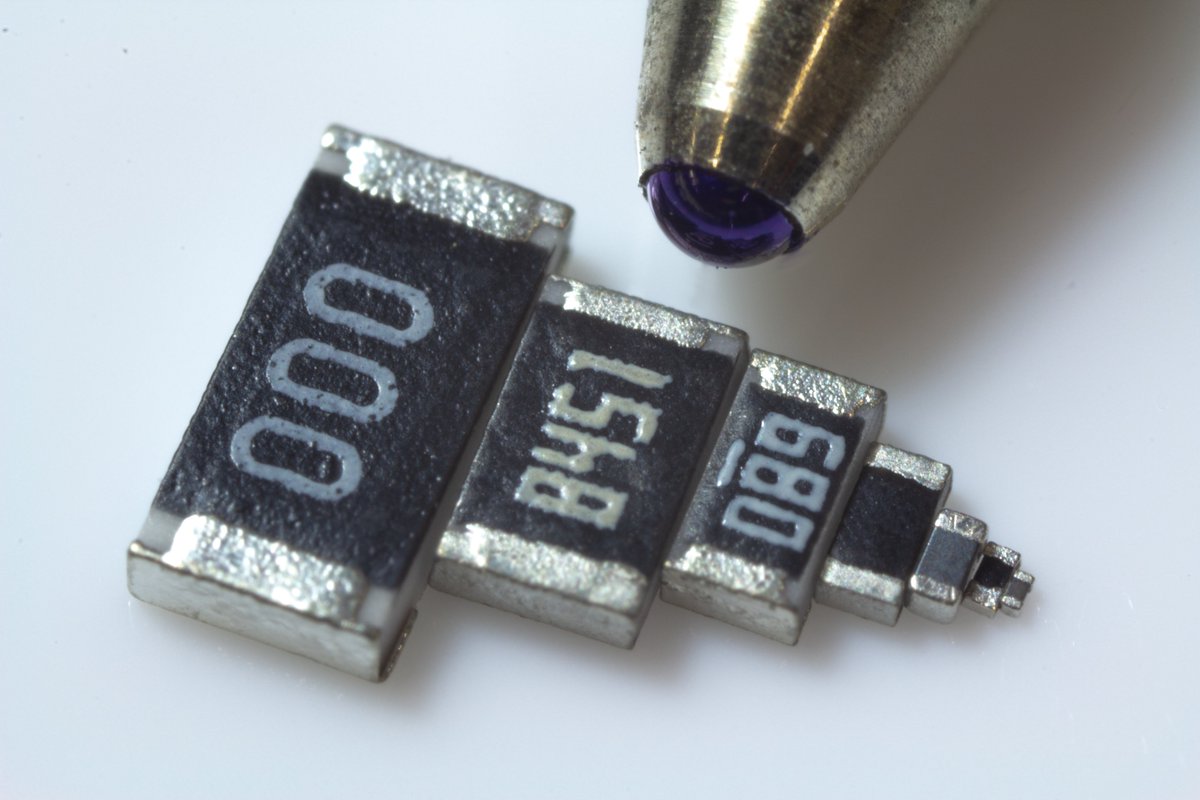
Hanwha SMT lines can handle many part sizes and types. Their machines work with chips as small as 01005. They can also place parts up to 55mm long and 25mm tall. Hanwha machines can handle LED lenses, connectors, and odd-shaped parts. This makes them good for tough jobs.
Feature | Details |
|---|---|
Component Size Range | 0402 (01005) up to 55mm length, 25mm height |
Component Types Supported | Chips, ICs, connectors, LED lenses, odd-shaped components |
Feeder Capacity | Up to 120 x 8mm feeders |
Placement Accuracy | ±40µm for chips, ±30µm for ICs with stage vision |
Special Features | Flying vision head, force control Z-axis, laser alignment |
JUKI SMT lines are also very flexible. The RS-1R machine works with parts from 0201 chips to big connectors up to 74mm square. JUKI machines use smart scanners to check part size and height. This means less setup and faster changes. JUKI machines can switch jobs quickly.
JUKI machines work with many kinds of parts.
Dual lane conveyors move two boards at once.
High feeder capacity lets them do many jobs.
Placement heads adjust to different shapes and sizes.
Both Hanwha and JUKI machines are good for modern factories. JUKI’s design and auto features make it extra flexible for busy places.
Line Configuration
Hanwha SMT lines can grow as factories get bigger. You can add more machines or feeders when you need them. Hanwha’s smart software helps keep everything running smoothly.
JUKI SMT lines use modular machines that fit together easily. The RS-1 and RX-7 can be used together for custom setups. JUKI’s dual lane conveyors and smart heads make it easy to switch between jobs.
Feature/Aspect | Hanwha SMT Line | JUKI SMT Line |
|---|---|---|
Modular Machines | Yes | Yes |
Feeder Capacity | Up to 120 feeders | Up to 112 feeders per machine |
Dual Lane Conveyor | Not standard | Yes (RS-1R, RX-7) |
Adaptive Placement Heads | Yes | Yes |
Integration | With Hanwha solutions | With JUKI solutions, easy scaling |
JUKI’s modular design and dual lane system help factories change lines fast.
Reliability
Uptime
Hanwha SMT lines stay running with strong machines and smart tools. Alerts warn workers before problems stop the line. This keeps the factory working and cuts down on stops.
JUKI SMT lines also work hard to avoid downtime. Their machines use simple designs and strong parts. This means they break less often. JUKI’s support team helps quickly if something goes wrong.
Durability
Hanwha builds machines with tough frames and good parts. These machines can work long hours without trouble. Factories trust Hanwha to last a long time.
JUKI machines are also built to last. They can handle lots of job changes and keep working. JUKI is known for making reliable machines that give good value.
Note: Both Hanwha and JUKI make strong, reliable machines. Factories can count on them to work well and not break down often.
Surface Mount Technology Value
ROI
Payback Period
Factories want to get their money back fast when they buy surface mount technology. Hanwha SMT lines can pay off quicker for big jobs. They have fast placement and smart software. This helps factories make more boards in less time. Because of this, companies get their money back sooner.
JUKI SMT lines cost less at first. This is good for small and medium factories. These SMT systems work well and give steady results. Many businesses see a fair payback time, especially if they do not make a lot of boards. JUKI’s simple design and easy care mean less downtime. This helps companies get their money back faster.
Tip: Companies should pick an SMT line that matches how much they plan to make. This helps them get their money back as soon as possible.
Long-Term Impact
Buying surface mount technology changes how a factory grows. Hanwha SMT lines help factories grow with modular machines. Factories can add new parts or update software when needed. This makes it easy to keep up with new products.
JUKI SMT lines also give value for a long time. They are strong and work well, so they need fewer repairs. Many factories use JUKI SMT machines for years without big changes. The support team helps keep the machines running.
Factor | Hanwha SMT Line | JUKI SMT Line |
|---|---|---|
Scalability | High (modular, upgradable) | Moderate (modular, compact) |
Longevity | Strong with vendor support | Strong with simple design |
Adaptability | Advanced software integration | Fast job changeover |
Total Cost of Ownership
Depreciation
Depreciation changes how much surface mount technology costs over time. Hanwha SMT lines keep their value because of their features and upgrades. Factories can update parts instead of buying new machines. This slows down how fast the machines lose value.
JUKI SMT lines lose value at a steady rate. They cost less at first, so you lose less money over time. Their simple design and good work help keep their resale value. Many businesses find it easy to sell or reuse JUKI SMT machines.
Upgrade Costs
Upgrade costs are important for owning SMT lines. Hanwha SMT lines let you add new parts as needed. Factories can add modules or new technology without buying a whole new system. Vendor support, like remote help and smart maintenance, keeps costs down.
JUKI SMT lines have upgrades that do not cost much. Their small size and modular build make adding new features easy. The support team gives quick help and training, so upgrades stay cheap.
Main factors that affect the total cost of owning Hanwha SMT lines:
Remote help lowers repair costs.
Good vendor support makes work better.
Training helps workers use the machines well.
Industry 4.0 helps control costs.
Energy-saving features save money over time.
Note: Both Hanwha and JUKI SMT lines help factories save money and get good value. Picking the right surface mount technology depends on what the factory needs, upgrade plans, and future goals.
Decision Factors
Business Needs
Every factory has its own needs. Some want to make lots of products fast. Others need to change what they make often. Hanwha SMT lines are good for big companies. These lines use smart machines and work very quickly. They help factories keep up with busy schedules. JUKI SMT lines are good for saving money and are easy to use. Small and medium businesses like JUKI because it costs less. JUKI can change jobs easily and does not need a big investment.
When picking an SMT line, leaders should think about their company size. They should also look at what products they make. Hanwha can grow with your business. JUKI is flexible for companies that change jobs often. Both brands let you add feeders and change the setup. This helps factories adjust as they get bigger or change what they make.
Production Volume
How much you make matters when choosing Hanwha or JUKI. Hanwha is made for big factories that make lots of boards. The HN Series can place 92,000 parts each hour. It is very fast and accurate. Hanwha is best for places that need speed and high output.
JUKI has models like the FX-3. It works for both big and small jobs. The FX-3 can place 90,000 parts each hour. JUKI is a good choice for saving money and switching between different jobs.
Brand | Model | Target Production Scale | Placement Speed (CPH) | Accuracy | Notes |
|---|---|---|---|---|---|
Hanwha | HN Series | Large and super large scale | 92,000 | ±25 μm | High speed and accuracy for large volume production |
JUKI | FX-3 | High volume and smaller batch | 90,000 | ±0.05 mm | Cost-effective, flexible for varying production sizes |
Factories should pick a line that matches how much they plan to make. Hanwha is great for fast and big jobs. JUKI is better for changing jobs or making smaller batches.
Product Complexity
How hard your products are to make also matters. Factories that build advanced electronics need machines for many part sizes. Hanwha and JUKI can handle complex jobs. Some companies pick other brands for even more options.
Many factories choose Panasonic, Yamaha, Fuji, or ASMPT for tough jobs. These brands offer:
Modular SMT lines with smart cameras and software
Fast speed and very good accuracy
Flexible machines for many kinds of parts
Automation that helps with hard and changing jobs
For example, Yamaha YSM20R and Panasonic NPM-W2 are fast and precise. ASM SIPLACE TX and Fuji AIMEX III have smart features and can grow with your needs.
Factories should think about how complex their products are. They should pick an SMT line that fits what they make now and later. The right machine helps keep quality high and lets factories change when the market changes.
Support Network
A good support network helps factories keep SMT lines working well. Hanwha and JUKI both give support, but they do it in different ways. People choosing an SMT line should check service quality, how easy it is to get spare parts, and if they can get help with problems.
Hanwha has service centers and trained engineers all over the world. Their team answers service calls fast. Hanwha can help from far away or come to the factory. This lets factories fix problems quickly and keep working. Hanwha stores spare parts in nearby warehouses. Factories get parts fast and do not have to wait long. Hanwha’s team helps set up machines, train workers, and update software. This makes it simple to start new lines or upgrade old ones.
JUKI is known for good support, especially for smaller factories. Their service centers are in many places. JUKI’s engineers help set up, fix, and take care of machines. The company gives help online and by phone. Factories get answers to questions right away. JUKI keeps spare parts in local warehouses. This means less waiting and more time making products. JUKI’s team helps with feeders and setting up lines. Factories can change their SMT lines for different jobs.
Tip: A quick and helpful support network means machines stop less and factories work better.
The table below shows how Hanwha and JUKI support compare:
Feature | Hanwha SMT Line Support | JUKI SMT Line Support |
|---|---|---|
Global Service Centers | Yes | Yes |
Remote Diagnostics | Yes | Limited |
On-site Assistance | Fast response | Available |
Spare Parts Access | Regional warehouses | Local warehouses |
Training Programs | Comprehensive | Practical |
Feeder Compatibility | Supported | Supported |
Line Configuration | Flexible | Flexible |
Both Hanwha and JUKI help factories keep SMT lines ready to use. Hanwha’s support is best for big factories. JUKI’s support works well for factories that change jobs a lot or make smaller batches. People should pick support that fits their factory’s needs. A strong support network helps factories run smoothly and grow.
I.C.T SMT Line Solution
Custom SMT Line
I.C.T gives custom SMT line solutions for special factory needs. Hanwha and JUKI focus on fast pick-and-place machines. I.C.T offers a full SMT line with many machines working together. Their lines have stencil printers, pick-and-place machines, reflow ovens, AOI, SPI, and PCB loaders. This setup helps smt production run smoothly from start to finish. I.C.T also has DIP lines with automatic insertion, selective solder, DIP AOI, X-ray, and ICT testers. Most Hanwha or JUKI lines do not have these extra features.
I.C.T custom SMT Manufacturer line works for car electronics, LED factories, security, and smart home devices. Their special coating systems protect both sides of PCBA. They use coating machines, curing ovens, and AOI for this job. Factories get help to make sure their smt line fits what they need. This custom help makes I.C.T different from others who only focus on speed and flexibility.
Note: I.C.T lets factories build a smt line that fits their needs, not just a basic setup.
SMT Line Machine Support
I.C.T gives strong support for every smt line. Their team helps plan the best factory layout. This makes work faster and stops slowdowns. Skilled workers set up, adjust, and check all pick-and-place and inspection machines. This makes sure the machines work well from the start.
Regular care and checks keep the smt line working well. I.C.T fixes urgent problems fast to stop long delays. They can check problems from far away and give updates and advice. If repairs or upgrades are hard, their experts come to the factory to help and train workers.
Support Service | I.C.T SMT Line Solution | Hanwha/JUKI SMT Line |
|---|---|---|
Factory Layout Design | Yes | Limited |
Installation/Setup | Comprehensive | Standard |
Maintenance | Proactive & Scheduled | Standard |
Remote Diagnostics | Real-time, global | Varies |
On-Site Support | Fast, expert | Available |
SMT Technology Support
I.C.T’s engineers help before, during, and after setup. Before buying, they design a custom smt line using PCBA specs, BOM, and goals. They give clear papers, layout drawings, and equipment lists to help factories plan.
During production, I.C.T checks quality closely. Machines are tested and packed safely for delivery. After setup, the team gives online lessons and fixes problems from far away, often in 30 minutes. They also train workers at the factory and give long-term help.
I.C.T has 16 engineers in other countries who answer in two hours and fix problems the same day. This support is better than what most Hanwha or JUKI users get. Factories feel safe knowing their machines will keep working with little trouble.
Tip: Picking I.C.T means you get expert help, good machines, and great support around the world.
Hanwha and JUKI SMT lines are both good choices for smt production. Hanwha is fast at picking and placing parts. It can be upgraded and has strong support for big jobs. JUKI is cheaper and easy to take care of. It is flexible when jobs change often. Experts say you should pick smt equipment that fits your production needs. Look at how fast it works, how many feeders it has, and what help the company gives. Factories should think about what they make now and what they want to make later. They can talk to engineers, check different offers, and ask for help when needed.


