What is the Best Coating Line Process for High-Reliability Circuit Board Protection

For high-reliability circuit board protection, you get the best results with a conformal coating. This coating is put on using the PCBA coating machine. You also need to follow strict process control. In some industries, failure is not allowed. These include medical and aerospace fields. The IPC 6011 and IPC-A-610E Class 3 standards are important. They set the rules for printed circuit board reliability. These standards require your pcb to handle very hot and cold temperatures. Your pcb must also resist dirt and other contaminants. A conformal layer covers and protects delicate pcb parts. It stops faults and keeps the board working right. You use conformal coating to give strong, even protection to every high-reliability circuit board.
Key Takeaways
Conformal coating keeps circuit boards safe from water, chemicals, heat, and bumps. This helps the boards last longer and work well.
Pick the right coating for your board’s place, heat needs, chemical risks, and repair plans.
Automated and selective coating lines spread coating evenly. They lower mistakes and make work faster for better results.
Check the process often. Look at thickness and use UV inspection to find problems early and keep quality high.
Clean and dry circuit boards before coating. This helps the coating stick and stops problems from dirt or water.
Work with skilled vendors who have strong quality checks, can customize, and talk clearly. This helps you get good coatings.
Keep good records of materials, steps, and checks. This helps you watch quality and keep getting better.
Choose coatings that protect but are easy to fix. Pick what matches how often you need repairs.
High-Reliability Circuit Board Needs
Reliability Factors
High-reliability circuit boards must follow strict rules. These rules make sure electronics work well in hard places. Groups like IPC and the Automotive Electronics Council set these rules. The table below lists the main standards and what they mean:
Performance Requirement / Standard | Description |
|---|---|
IPC-A-610 (Class 2 or 3) | Gives rules for electronic assemblies. It helps keep automotive, aerospace, and medical electronics safe and reliable. |
IPC-6012E | Sets quality and performance for rigid pcbs. It works for many board types and has high standards. |
IPC-6012EA | Adds more rules for automotive pcbs. It checks inspection, strength, and conductor testing. |
IPC-6013E | Used for flexible and rigid-flex pcbs. It matters for boards that bend or face vibration. |
IATF 16949:2016 | Sets quality management for automotive electronics. It focuses on process control and getting better. |
Automotive Electronics Council (AEC) Standards | Sets test rules for parts like sensors and chips. It makes sure these parts work in cars. |
Critical Performance Factors | You need reliability, safety, thermal management, strength, and good quality control. |
You have to follow these rules to keep your circuit boards safe and working. They help stop failures that could cause big trouble in important electronics.
Common Threats
Circuit boards face many dangers in tough places. These dangers can hurt your pcb and make electronics stop working. The most common dangers are:
Humidity and moisture can cause rust and short circuits.
Corrosive substances attack metal parts and traces.
Very hot or cold temperatures make materials change shape.
Contaminants like dust or chemicals can land on the pcb.
Mechanical stress, such as vibration or shock, can break solder joints.
Electromagnetic interference (EMI) can mess up signals.
Tests like solderability checks, thermal cycling, and corrosion resistance help find weak spots before use.
The table below shows how different conditions change failure rates for high-reliability circuit boards:
Environmental Condition | Failure Rate (%) |
|---|---|
Thermal cycling with 60% humidity | 1.2 |
Thermal cycling with 85% humidity | 4.5 |
Note: Moisture and temperature changes make failure rates go up. Vibration and EMI also cause problems, like cracked solder joints and lost signals.
You need strong protection to keep your pcb safe from these dangers. Good design, picking the right materials, and cleaning well all help protect electronics. Using the best coating and process helps your circuit board last longer and work well anywhere.
PCB Coating Types
Picking the right pcb coating is very important. It helps keep high-reliability circuit boards safe. You should know about the main conformal coatings. Each type works differently. The best conformal coating depends on where you use your pcb. It also depends on how tough it needs to be and how much protection you want.
Here is a table that compares the most common conformal coatings. It shows how they do in important areas:
Coating Type | Chemical Resistance | Dielectric Strength | Key Notes | |
|---|---|---|---|---|
Acrylic (AR) | Good (4/5) | Low (1/5) | High (5/5) | Low cost, easy to apply, common, limited chemical resistance and heat tolerance |
Epoxy (ER) | Good (4/5) | Moderate (3/5) | High (5/5) | Moderate chemical resistance, good dielectric, prone to moisture-induced swelling and peeling |
Urethane (UR) | Excellent (5/5) | High (4/5) | Reliable (4/5) | High chemical and moisture resistance, good dielectric, prone to cracking above 125°C |
Silicone (SR) | Good (4/5) | Moderate (4/5) | High (5/5) | Hydrophobic, good moisture control, limited solvent resistance, flexible but requires thicker application |
Parylene | Excellent (5/5) | Outstanding (5/5) | Excellent (5/5) | Chemically inert, ultra-thin uniform coverage, best for harsh environments and advanced tech, costly and difficult to remove |

Acrylic
Acrylic pcb coating is very popular. It is easy to put on and take off. This makes it good for projects that need repairs. Acrylic coatings stop moisture and block electrical shorts. They give your pcb good protection from water and electricity.
But acrylic coatings have some problems. They do not work well with strong chemicals or high heat. The coating can crack if it shakes or gets hit. It only handles heat up to 125°C. If your electronics face tough places, acrylic may not be the best choice.
Key features of acrylic coatings:
Simple to put on and take off
Stops moisture well
Saves money for most uses
Not strong against chemicals or heat
Not good for lots of shaking or high heat
Tip: Use acrylic conformal coating for indoor electronics, cheap projects, or when you need quick fixes.
Polyurethane
Polyurethane, also called urethane, is a pcb coating. It gives great protection from chemicals and water. Pick polyurethane if your pcb meets solvents or needs strong safety. This coating is tougher and harder than acrylic. It works well for cars or factory electronics.
Polyurethane coatings have some downsides. They take a long time to dry, sometimes up to 30 days. This can slow your work. Taking off this coating is hard and can hurt your pcb. It is not good if you need to fix your boards often.
Advantages of polyurethane coatings:
Tough and hard for rough places
Great at stopping water
Limitations:
Long drying time slows work
Hard to take off or fix
Can hurt pcb when removed
Note: Polyurethane is best for important jobs where you need strong safety and do not plan to fix often.
Silicone
Silicone pcb coating is very flexible. It can handle very hot and cold places. You can use silicone from -55°C to 200°C. Some types go even higher. This coating makes a thick, bendy layer. It soaks up shaking and bumps. It is great for electronics that get moved or hit.
Silicone coatings stop water and block electricity well. But they let some water through, which can cause rust. Silicone does not fight solvents as well as other coatings. It can wear out faster if things rub against it.
Feature | Acrylic Coating | Silicone Coating |
|---|---|---|
Moisture Resistance | Good | Excellent |
Chemical Resistance | Moderate | High |
Thermal Resistance | Up to 125°C | Up to 200°C |
Flexibility | Low to Moderate | High |
UV Resistance | Fair | Excellent |
Ease of Repair | Easy | Difficult |
Application Environment | General-purpose | Harsh and extreme |
Why choose silicone?
Great for very hot or cold places
Very bendy for shaking and bumps
Good for planes, cars, and medical electronics
Callout: Silicone is a top conformal coating for important jobs with big temperature changes and lots of shaking.
When you pick a pcb coating, match the conformal type to your needs. The best conformal coating depends on where you use it, if you need repairs, and how much safety you want. By knowing what each coating does well and not so well, you can keep your pcb safe.
Epoxy
Epoxy pcb coating is great for strong, long-lasting protection. You often use this coating when your pcb faces tough places. Epoxy keeps out chemicals, water, and big temperature changes. This makes it a good pick for factories and cars.
Epoxy pcb coating gives you many benefits:
Stops chemicals and water from getting in
Handles big temperature changes and dirt
Makes a tough layer for harsh places
Epoxy coatings help your electronics last a long time. The hard layer keeps out water and dirt. It also stops rust and electrical problems. You can trust epoxy for boards in cars, factories, or outside.
But epoxy has some problems. It is very hard to take off. If you need to fix your pcb, you must use special chemicals. This takes a lot of work and can hurt your board. If you need to fix boards often, you may want a different coating.
Tip: Pick epoxy pcb coating if you want strong protection and do not need to fix your board much.
Parylene
Parylene pcb coating gives the best protection for important boards. This coating uses a special process called chemical vapor deposition. It makes a very thin, even layer that covers every part of your pcb. It fills tiny spaces and sharp corners. You get a smooth barrier that keeps out water, chemicals, and bad gases.
Parylene coatings have special benefits:
Very thin and light, fits in tiny spaces
Covers tricky shapes and small gaps well
Stops fungus, water, chemicals, and heat damage
Strong electrical insulation
Safe for medical and sensitive electronics
You can use parylene in many fields. Medical, space, military, and car companies use it for important electronics. It protects devices from heat, cold, wetness, and even radiation. You also see parylene on gadgets, drones, and space gear.
Parylene is not a liquid, so it does not hurt fragile parts. It sticks at the smallest level and makes a strong shield for years. This makes it one of the best coatings for tough places.
Note: Parylene costs more and needs special tools. But if you want the best safety and reliability, it is the top choice for conformal coatings.
Application Methods

Automated Lines
Automated lines use robots and conveyor belts to coat pcb assemblies. These machines move each pcb through the coating steps. You can set up these lines to handle many boards at once. People do not need to help much. This makes the coating even on every board. It also lowers mistakes that people might make. This is very important for high-reliability pcb assembly.
You can watch and change the coating thickness, speed, and heat as you work. This keeps the process steady and the results the same each time. Automated lines are best when you need to make lots of boards that must all be high quality.
Tip: Automated lines save time and money. They also make sure every pcb assembly gets the same good coating.
Precision Spray
Precision spray lets you control how thick and where the coating goes. You use special spray tools or ultrasonic machines for this. The coating goes on in a thin, even layer. This works well for tricky pcb assembly shapes. It is used a lot in cars and planes.
You can change how the spray moves and how much comes out. This helps you cover only the right spots. You can keep sensitive parts safe and skip areas that should not get coated. This means fewer mistakes and better safety from water and chemicals. Good machines, like ones from Mycronic or Sono-Tek, help you get even coating and fewer problems.
Precision spray gives you:
Even coating on every pcb assembly.
Less wasted coating material.
Good safety for delicate parts.
Fewer mistakes and less fixing needed.
You need to clean and check your spray tools often. This stops clogs and keeps the coating smooth. Checking your work by looking and measuring helps you find problems early.
Dipping
Dipping is a quick way to coat many pcb assemblies at once. You put each pcb into a tub of coating. Every part gets covered fast. This is best for simple pcb shapes and when you need to make a lot.
Description | Process Control & Consistency Characteristics | |
|---|---|---|
Dipping | Put pcb in coating bath, fast and covers all sides. | Makes many boards quickly, but only works for simple shapes that do not leak. |
Dipping gives you an even layer and saves time for big batches. The tools are easy to use and not expensive. But some coating may drip off and get wasted. You must take out each pcb carefully to stop bubbles or sagging. Dipping does not work well for big or tricky pcb assemblies. If the design is not right, the coating can leak.
Note: Dipping is good for small, simple pcb assemblies. It is fast and covers well, but not for complex shapes.
Selective Coating
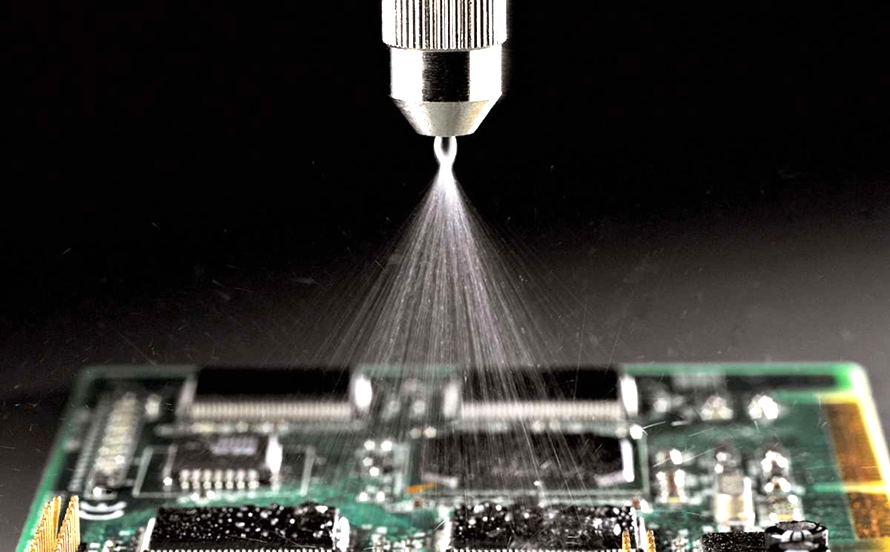
Selective coating lets you protect your pcb assembly with great accuracy. Automated machines put the coating only where it is needed. This keeps connectors and test points clear. The machines use special spraying technology. You do not waste coating on spots that should stay open.
There are many good things about using selective coating for your pcb assembly:
Automated spraying puts coating in the right places. You do not get extra spray or messy lines.
You save coating because the machine skips no-coat areas. This means less waste and saves money.
The coating is always the same thickness. Every pcb assembly gets equal protection. This is important for high-reliability electronics.
You do not need to spend much time or money on masking. Manual masking takes a lot of work and slows down production. Selective coating makes things faster.
Using less coating and making less waste helps the environment. Your process is cleaner and more efficient.
Selective coating is great for high-reliability jobs. You can count on this method for steady results, even with many pcb assemblies. The sharp edges and even coverage help your boards meet tough industry rules.
Tip: If you want to make your process faster and use less material, selective coating is a smart pick for high-reliability pcb assembly.
Selective coating also makes your products more reliable. By keeping sensitive spots free from coating, you avoid problems during testing and final assembly. Your boards work better and last longer.
Selective coating technology keeps your production line moving quickly. You do not have to stop for extra masking or fixing mistakes. The automated system checks each board for good coverage. You find problems early. This control helps you give your customers top-quality products.
Process Control & Quality
Conformal coatings must be smooth and have no mistakes. This is very important for high-reliability circuit boards. You need to follow strict steps to make sure every board is good. Using the best ways to check quality helps stop problems. It also makes sure your electronics work well.

Thickness Checks
You must check how thick the conformal coating is on each board. If the coating is too thin, it will not stop water or chemicals. If it is too thick, it can crack or peel off. Use special tools to measure before and after the coating dries. Check the thickness in many places on the board. Always look at your results and compare them to the rules.
Make your thickness checks better by:
Measuring in different spots on every board.
Using test pieces to check your process.
Treating thickness as an average, since board shape can change results.
Keeping the coating in the safe range to stop problems.
Tip: Machines and smart tools can help you watch thickness and find problems early.
UV Inspection
UV inspection is a quick way to check if the coating covers the board. Most coatings have a UV marker. When you shine a UV light, the coated parts glow. This helps you see missed spots, bubbles, or thick areas.
Use UV inspection to:
Find coating mistakes before the board is finished.
Make sure solder masks and special spots are covered right.
Check that the coating is good enough for important jobs.
You can use UV inspection with other machines for even better checks. This helps you keep your boards safe and working well.
Defect Prevention
To stop coating problems, start with a clean board. Clean the board after soldering to get rid of dirt and oil. Use special cleaning or plasma to help the coating stick better. Cover connectors and test points so they do not get coated.
Follow these steps to stop common coating mistakes:
Dry or heat boards to get rid of water and stop bubbles.
Pick the right coating and way to put it on for your board.
Watch the coating process with machines and keep track of data.
Check every board for cracks or other problems.
Test the board with things like Damp Heat, Salt Spray, and Insulation Resistance.
Note: Picking a good PCB maker and using materials you can track helps you get perfect coatings.
If you follow these steps, your coating will protect every board well and last a long time.
Selection Factors
Environment
You need to think about where your circuit board will be used. Different places can hurt your electronics in different ways. Some places are very wet. Others have a lot of dust, salt, or strong chemicals. Each of these can damage your board in its own way.
Wet air and water can cause rust and electric leaks.
Dust and salty air can wear down your board or cause shorts.
Shaking and big temperature changes can bend or soften the coating.
Sunlight and mold can also hurt your board over time.
Pick a coating that protects well from these problems. Choose one that stops water and rust, works in hot and cold, and blocks acids and bases. If your board will be in the sun, make sure the coating blocks UV light.
Before picking, do tests like checking how well the coating blocks electricity, how it works when wet, and how it handles heat. These tests show if the coating is good for your board and where it will be used. Always check if the coating fits your PCB design and what it needs to do.
Tip: Think about how the coating dries, if it is safe, and if you can fix it later. These things matter for safety and repairs.
Temperature
Hot and cold can change how your coating works. Some coatings handle heat better than others. If your board gets very hot or cold, you need the right coating.
Coating Type | Maximum Temperature Tolerance | Performance Impact at Temperature Extremes |
|---|---|---|
Silicone | Works well in hot places; good for tough jobs. | |
Acrylic | Up to 125°C | Not good for very hot places; does not handle heat well. |
Epoxy | N/A | Gets weaker in very hot or cold places; hard to fix. |
Polyurethane | N/A | Does not work well in hot or shaky places; good with chemicals. |
If your board is in a hot spot, silicone is best. It keeps working up to 200°C. Acrylic only works up to 125°C. It can crack or peel if it gets hotter. Epoxy and polyurethane can get weak or hard to fix if it gets too hot.
How you store your coating matters too. Keep it between 5°C and 25°C and dry. If it gets hotter than 30°C, it might dry out or go bad. If it gets colder than 0°C, it can separate and not work. Good storage helps your coating last 6 to 12 months.
Chemical Resistance
If your board will touch strong chemicals, you need a tough coating. Some coatings protect better in factories or hospitals.
Coating Type | Chemical Resistance Characteristics | Suitability for Harsh Industrial/Medical Environments |
|---|---|---|
Polyurethane | Best at stopping oils, cleaners, and many chemicals; tough against scratches | Great for tough factory jobs |
Epoxy | Very good at blocking chemicals and giving strong protection; not very bendy | Good for jobs needing strong chemical and physical safety |
Parylene | Blocks water, dust, and chemicals very well; put on by vapor | Used a lot in medical and space electronics |
Silicone | Great for heat and bending; not best for chemicals | Good for hot and bendy jobs, not for strong chemicals |
Acrylic | Good at stopping water and dust; not great with strong chemicals | Used a lot but not for tough chemical places |
Polyurethane is best for blocking oils, cleaners, and chemicals. Epoxy is good if you need both chemical and strong physical protection. Parylene is great for medical and space boards because it blocks water, dust, and chemicals. Silicone and acrylic do not block strong chemicals as well, but they work for other needs.
Note: Always pick a coating that matches the chemicals your board will face. This helps stop rust and keeps your board working longer.
Reworkability
When you pick a conformal coating, think about reworkability. Reworkability means how easy it is to fix or remove the coating. Sometimes, you need to repair or change things on your circuit board. High-reliability electronics often need updates or fixes during their use. If you choose a coating that is hard to remove, repairs can be tough or might hurt your board.
Here is a table that shows how coatings compare:
Coating Type | Reworkability | Impact on Maintenance and Repair |
|---|---|---|
Acrylic | Easy to apply and remove; reworkable | Makes repairs and changes simple; best for boards that need frequent maintenance |
Polyurethane | Hard to remove after curing | Good for long-term use; makes repairs slow and difficult |
Epoxy | Very hard and rigid; tough to remove without damage | Repairs are risky; not good for boards that need many fixes |
Silicone | Not clearly defined | Known for strong protection; rework process may need special steps |
Parylene | Very hard to rework; needs special tools | Repairs are complex and costly; best for boards that rarely need changes |
Acrylic coatings are easy to take off. You can use simple solvents to remove them. This makes acrylic a good choice if you fix or upgrade boards a lot. It saves time and helps protect parts when you do repairs.
Polyurethane and epoxy coatings are strong and last a long time. But they are hard to remove when you need to fix something. You need strong chemicals or heat to take them off. This can hurt small parts on your board. If you use these coatings, plan for fewer repairs and be careful.
Parylene coatings give the best protection. They cover every part of the board with a vapor process. Taking off parylene is hard and needs special tools. Repairs cost more and take longer. Use parylene only if you need top protection and do not plan to fix the board much.
Silicone coatings protect well from heat and water. But it is not always clear how to remove them. Some types peel off with effort. Others need special solvents.
Tip: If you need to fix or update boards often, pick a coating that is easy to remove, like acrylic. If your boards will not need many changes, you can use stronger coatings like epoxy, polyurethane, or parylene.
You need to balance protection and repair needs. Think about how often you will fix your boards. Pick a coating that fits your repair plan. This helps your electronics last longer and keeps repair costs low.
Best Practices
Vendor Choice
Picking the right vendor for high-reliability circuit board coating is very important. The right partner knows what you need and gives you good quality every time. Use these points to help you choose a vendor:
Expertise and Experience: Choose vendors who have done PCB design and assembly for a long time. They should know a lot and give you good advice.
Manufacturing Capabilities: Find vendors with modern machines and skilled workers. Their systems should meet high standards.
Quality Control Measures: Make sure the vendor checks quality with strong tests and has the right certificates.
Customization Options: Pick vendors who can change things to fit your design, materials, or finish.
Scalability and Production Volume: See if the vendor can make both small and big orders without losing quality.
Cost and Pricing Structure: Think about price, but also look at quality, speed, and extra help. The cheapest is not always the best.
Lead Time and Delivery: Check that the vendor can finish on time and keep your project moving.
Customer Support and Communication: Work with vendors who answer fast and help you from start to finish.
Tip: A good vendor is like a partner. They help you fix problems and make your products better.
Maintenance
You must use good maintenance steps to keep your coated circuit boards working well in hard places. Always start by making sure each PCB is clean and dry before coating. Cleaning gets rid of things like flux, oil, and dirt that can cause problems or trap water. You can use machines or clean by hand to do this job well. Clean boards help the coating stick, stop shorts, and lower the chance of failure.
Design your PCB with solder mask and conformal coatings to block water and dirt.
Use materials that resist water and seal holes to keep water out.
Put your boards in boxes with good seals, vents, and drains to stop water.
Control the air with heat, fans, and things that soak up water.
Use sensors to watch for trouble early.
Check and test boards often with stress tests to make sure they stay safe.
Note: Many companies have made their boards last longer and saved money by doing these things, especially for outdoor or far-away systems.
Documentation
Good records help every part of your coating process. You need clear notes to track what you use, how you work, and what you check. This helps you show you follow the rules and makes checks easier.
Keep good notes about:
Which coating materials you use and when they expire
How you clean and get boards ready
How you put on the coating and what machine settings you use
What you find when you check thickness and use UV lights
What you do for repairs or upkeep
A strong record system helps you see patterns, fix problems fast, and teach new workers. When you keep your notes up to date, you protect your business and your customers.
Callout: Good records help you stop quality problems and keep your standards high every year.
If you want your circuit board to last, use automated or selective coating lines. These lines help put the coating on evenly and carefully. You must also follow strict rules during the process. Pick a coating type like parylene, silicone, or polyurethane. The best one depends on where your board will be used and if you need to fix it later.
Work with vendors who have lots of experience and good quality checks.
Write down every step you take and check each board closely.
Tip: Using the right coating and process helps your electronics stay safe and work well, even when things get really tough.
FAQ
What is the main purpose of conformal coating on circuit boards?
Conformal coating protects circuit boards from moisture, dust, chemicals, and extreme temperatures, extending electronics lifespan and reliability. It forms a thin, uniform layer over PCBs and components, preventing corrosion, short circuits, and environmental damage. In multi-device manufacturing or industrial applications, conformal coatings reduce rework and warranty failures by ensuring that high-density PCBs remain fully operational in automotive, medical, aerospace, and consumer electronics environments. Proper application and inspection are critical to achieving consistent protection and maximizing board performance.
How do you choose the right coating type for your PCB?
Selecting the correct conformal coating depends on environmental exposure, thermal requirements, and rework needs. Acrylic coatings are easy to remove for repairs, while epoxy or parylene provide stronger chemical resistance. Consider board complexity, density, and connector accessibility. For multi-device or high-volume SMT production lines, solvent-based coatings cure faster and handle complex geometries, whereas water-based coatings offer safer handling and environmental benefits. Always evaluate coating viscosity, cure method, and compatibility with inspection systems to ensure quality coverage and long-term reliability.
Can you repair a coated circuit board?
Yes, some conformal coatings can be removed for repairs or modifications. Acrylic coatings are often dissolved with mild solvents, while epoxy, urethane, or parylene may require specialized chemicals or mechanical removal tools. Technicians should follow the manufacturer’s guidelines to prevent damaging traces, pads, or components. For multi-device SMT lines, using a removable or selectively applied coating enables rework without compromising adjacent areas. Careful masking during removal and re-application ensures consistent protection and reduces the risk of defects, maintaining the board’s performance and reliability.
How do you check if the coating covers the whole board?
A UV inspection is the most common method to verify full conformal coating coverage. Most coatings fluoresce under UV light, making missed spots, pinholes, or uneven layers visible. Inline or offline automated inspection systems can scan multiple PCBs quickly for quality control, especially in multi-device or high-volume production. Manual UV checks are also effective for smaller batches. Consistently verifying coverage ensures electrical insulation, prevents corrosion, and helps meet reliability standards for aerospace, automotive, and medical applications, reducing the risk of field failures.
What is the best method for coating high-reliability boards?
Automated or selective conformal coating lines are ideal for high-reliability PCBs. These systems deliver consistent, even coverage with minimal human error, accommodating multi-device and high-density SMT boards. Selective coating minimizes waste and avoids sensitive areas like connectors or test points, while fully automated lines optimize throughput for large production runs. Integrating real-time sensors and vision inspection ensures precise application, reducing defects such as bubbles or bare spots. Using controlled cure processes and appropriate coating types enhances electrical insulation, chemical resistance, and long-term reliability for demanding applications like automotive, aerospace, and medical electronics.