
How to Use AOI and SPI Data Fusion for Effective Defect Prevention

When you use AOI and SPI data together in electronics manufacturing, you can stop more defects. Automated optical inspection and SPI Inspection Machine help each other find problems. You can catch defects before they get worse. Finding problems early means you fix less and make more good products. You can also do real predictive maintenance. Data fusion connects inspection results, so you know where problems begin. Manufacturers using this way see 85% fewer defect escapes and 60% lower rework costs. With SMT AOI Inspection and combined inspection, you can get first-pass yield close to 98%. Every inspection model shares data, so your process is faster and more reliable. You get full traceability and instant feedback. This way keeps your production line working well and fast.
Key Takeaways
Using AOI and SPI data together helps find more defects early. This makes products better and lowers the need to fix mistakes. AOI checks parts and solder joints after they are put in place. SPI looks at solder paste before parts are added. When you combine their data, you see the whole process. Data fusion gives real-time feedback and alerts. This lets you fix problems fast and stops defects from spreading. Good, steady data and matched inspection systems are needed for good defect finding and control. Putting AOI and SPI data in one place breaks down barriers. This makes finding defects smarter and quicker. Machine learning with fused data can guess defects and equipment problems. This helps you fix things before they break and get more good products. Training your team to use fused data and tools helps them spot defects. It also keeps your production line working well. Using a clear checklist and updating your models often helps you prevent defects for a long time. This also saves money.
Why Data Fusion?
AOI and SPI Limitations
Some people think AOI or SPI can find every defect. But each model misses some problems. AOI is good for looking at things you can see. It cannot find hidden defects under parts like BGAs. AOI also cannot find electrical problems that a camera cannot see. SPI checks solder paste after it is printed. But SPI does not check if parts are in the right place. It also does not check solder joints after reflow. If you use only one inspection model, you might miss problems. These problems can show up later in the process.
Tip: AOI and SPI are both important. But you need both to see everything.
Synergy of Data Fusion
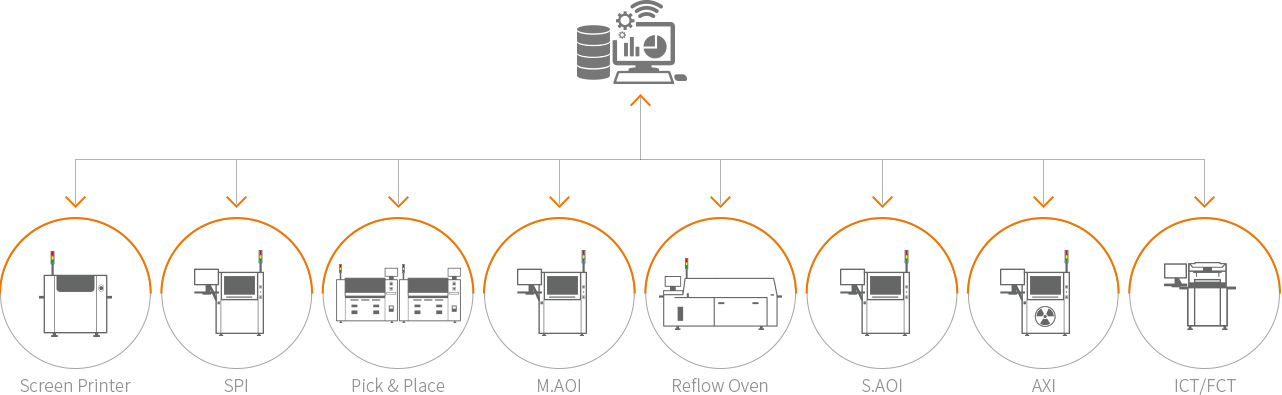
When you use AOI and SPI data together, you find more defects. You also control your process better. Experts say data fusion is needed in modern factories.
You collect defect data at different steps. This helps you find problems early and fix them fast.
SPI checks solder paste right after printing. AOI looks at parts and solder joints after placement and reflow. When you put their data together, you see the whole process.
Data fusion helps AI engines. This lets you build smart factories and self-fixing lines.
You get better inspection and fewer mistakes. This saves money and time.
Data from both models helps you lower defects and work faster.
AOI and SPI give you measurement data. This keeps SMT lines running well and stops human mistakes.
With data fusion, you stop defects before they happen.
Real-World Impact
Let’s see what happens when you use data fusion. In one case, engineers looked at over 100 million rows of SPI and AOI data. They put all the data into one model. This made it easier to find what caused defects. With machine learning, they found problems fast and made quality better. This cut down on false calls and gave engineers clear ideas to fix things.
Another company used 3D SPI and AOI models with AI. By joining high-quality 3D data, they found more defects. Their process got smarter. They could handle new parts and had fewer false alarms. This kind of data fusion helps you keep up with changes and run your line well.
Note: Real results show data fusion works. It helps you find more defects, make fewer mistakes, and build smarter factories.
AOI and SPI Roles
AOI Overview

AOI checks if your electronic products are made well. AOI means automated optical inspection. This model uses sharp cameras and smart programs to find problems fast. It can spot missing parts, wrong parts, or parts that are not straight. AOI also looks for soldering problems like too much or too little solder, cold joints, or bridges between pins. It can even find board issues like scratches or stains.
AOI takes clear pictures of each thing on the board.
The system uses pattern matching to check each thing against a perfect one.
AOI gives you quick feedback, so you can fix things right away.
You can use AOI on the line or off the line, based on your setup.
AOI works with both 2D and 3D inspection, which helps find hidden problems.
AOI helps you keep your process in control. You get fewer missed defects and less fixing. It also makes training easier because the model gives clear answers.
SPI Overview

SPI means solder paste inspection. You use this model after you put solder paste on your board. SPI checks if the paste is in the right place and if there is enough. This model looks closely at the paste, which is important for strong solder joints.
Here’s a quick look at what SPI checks:
Inspection Parameter | Description | Typical Target Range / Threshold | Importance / Limitation |
|---|---|---|---|
Solder Paste Volume | How much paste is on each pad | 100-150 cubic micrometers | Not enough makes weak joints; too much makes bridges |
Solder Paste Height | How thick the paste is | 130-160 micrometers | Makes joints strong and even |
Solder Paste Area Coverage | How much of the pad is covered | 90-100% is best; under 80% is bad | Not enough coverage means bad soldering |
Solder Paste Alignment | How well the paste lines up with the pad | Offset over 25 micrometers is bad | Bad alignment can move parts and cause bad links |
Limitations | False alarms, hard with tricky boards, high price | Cost: $50,000-$150,000 | You can change settings and lights to help; tricky boards need smart software |
3D SPI Advantages | Checks volume, height, area; finds small height changes | N/A | Finds problems early, better results, less fixing, helps with tiny parts |
SPI model gives you a close look at the first step in SMT making. You can find problems before you put on any parts. This makes your training and process control much better.
Data Correlation
When you use AOI and SPI data together, you see your whole process better. AOI and SPI each look at different things and steps. SPI checks the solder paste first. AOI checks the parts and solder joints after they are placed and heated. By linking their data, you can find where problems start.
You can tell if a solder problem started with bad paste or a part in the wrong place.
The model helps you match each check from SPI to AOI.
You can use this deep data to train your team and your AI.
Data fusion helps you see patterns and fix problems early.
You get better checks, fewer false alarms, and smarter control.
When you use both AOI and SPI models, you make a strong training loop. You catch more problems, improve your checks, and keep your line running well.
Data Fusion Steps
Data Collection
Quality and Consistency
You want your aoi and spi systems to collect the best data possible. High-quality data makes your defect detection model smarter and more reliable. If you skip this step, your object detection models might miss defects or give you false alarms. Here’s how you can make sure your inspection data stays top-notch:
Train your operators well. Good training helps them use every feature of the model and keeps inspection quality high.
Keep your aoi and spi systems working together on the line. This makes your data more consistent and helps your deep learning models spot patterns.
Take care of your inspection equipment. Regular maintenance means your cameras and sensors always give you clear, deep images.
Use high-resolution imaging and smart lighting. This helps your ai-powered inspection catch even tiny defects on each object.
Let automated image analysis do the heavy lifting. This reduces human mistakes and makes your defect detection model more accurate.
Focus on catching defects early with spi. This step cuts down on rework and boosts your overall manufacturing quality.
You need to check every object with the same care. Consistent data helps your deep object detection models learn faster and gives you better results.
Synchronization
You can’t get the most out of data fusion if your aoi and spi models don’t talk to each other in real-time. Synchronization means both systems check the same object at the right time. When you sync your inspection steps, you get deep, connected data for every board.
Use real-time data sharing between your aoi and spi models. This lets you track each object from start to finish.
Make sure your inspection systems use the same time stamps and object IDs. This helps your defect detection model match results and spot trends.
Set up real-time analytics so you can see problems as soon as they happen. You can fix issues before they turn into big defects.
Tip: When you synchronize your inspection data, you build a deep feedback loop. This loop helps your ai-powered inspection catch defects early and keeps your manufacturing line running smooth.
Integration
Centralization
You collect a lot of inspection data from your aoi and spi models. If you keep this data in different places, you miss out on deep insights. Centralization means you bring all your real-time data into one spot. This makes it easier for your defect detection model to find patterns and for your team to make smart decisions.
Use a cloud-based data warehouse or data lake. This helps you store all your inspection data together.
Automate your data integration with scripts or ETL tools. This keeps your object detection models up to date and reduces errors.
Protect your data with strong security. Use encryption and access controls to keep your inspection results safe.
Centralized data helps your ai-powered inspection and deep learning models work better. You get a full view of every object and every defect.
Overcoming Silos
Data silos can slow you down. If your aoi and spi models don’t share data, your defect detection model can’t see the whole picture. You need to break down these walls to get the most from your inspection systems.
Standardize your data formats. This helps your object detection models read and use data from both aoi and spi.
Train your team to value data sharing. Good training builds a culture where everyone works together.
Use modern data management tools. These tools help you handle deep, complex inspection data and keep your real-time analytics running fast.
Plan for data backup and recovery. This keeps your inspection data safe, even if something goes wrong.
Note: When you overcome silos, your ai-powered inspection gets smarter. Your defect detection model finds more defects, and your manufacturing process gets stronger.
Real-Time Feedback
Process Control
Real-time feedback is the heart of smart manufacturing. When your aoi and spi models share real-time data, you can spot defects as soon as they appear. This helps your defect detection model guide your team to fix problems right away.
Use real-time data to catch defects from the start. You can stop bad trends before they spread.
Set up closed-loop feedback. Your inspection systems can tell your printers and placers to adjust settings in real-time.
Connect your inspection data to your MES or Industry 4.0 platform. This gives you deep traceability and helps your object detection models learn from every object.
Real-time feedback keeps your process under control. You waste less time and money on rework, and your deep learning models get better with every board.
Automated Alerts
You don’t want to wait until defects pile up. Automated alerts from your aoi and spi data fusion warn you about problems right away. These alerts use real-time data to keep your defect detection model on track.
Get alerts when defect trends go above your set limits. This lets you act fast and prevent big issues.
Use anomaly detection to spot deep process drifts. Your ai-powered inspection can adjust settings before defects spread.
See all your inspection results on a real-time dashboard. This helps your team make quick decisions and keeps your object detection models sharp.
Place your aoi model before reflow to catch placement errors early. This step helps you reach zero-defect goals.
Pro Tip: Automated alerts help you prevent defects, not just find them. Your real-time analytics and deep learning models work together to keep your manufacturing line running at its best.
AI and Analysis

Machine Learning
You want your inspection process to get smarter over time. That’s where machine learning steps in. When you feed your model with deep data from AOI and SPI, it starts to see patterns that people might miss. You can train your model to spot tricky defects and link them to the right step in your process. This means your object detection models get better with every board you inspect.
Your model learns from every object that passes through the line. It uses deep learning to connect the dots between solder paste issues and later defects. You can set up your training so the model knows what a good object looks like and what a bad one does. Over time, your model will catch more defects and give you fewer false alarms.
You don’t have to do all the training by hand. Your ai-powered inspection system can use automated training cycles. It pulls deep data from both AOI and SPI, then updates your object detection models. This keeps your inspection sharp, even when you change parts or boards. You can trust your model to keep up with new challenges.
Tip: Keep your training data fresh. The more deep and varied your data, the smarter your model becomes.
Predictive Insights
When you combine AI with deep inspection data, you unlock powerful predictive insights. Your model doesn’t just find defects—it helps you stop them before they happen. Here’s how you can use ai-powered inspection and object detection models to boost your process:
AI brings together real-time data from AOI and SPI. Your model can spot defects like solder joint problems or paste issues as soon as they appear on any object.
Machine learning digs into your deep data. It finds patterns and root causes by linking results from both inspection steps. This lets you fix process failures before they spread.
Your model keeps an eye on equipment health. It predicts when a machine might fail, so you can fix it before it stops your line. This means less downtime and smoother runs.
AI helps you tune your SMT programming. Your model can adjust process settings on the fly, cutting down on errors and making your results more consistent.
With these insights, you boost your first-pass yield. You spend less on rework and scrap, and your products come out better every time.
Your object detection models and deep learning tools work together to give you a clear view of every object and every defect. You can use these insights to train your team, improve your process, and keep your line running at its best.
Note: Predictive insights from your model turn your inspection data into real action. You don’t just react to problems—you prevent them.
Defect Prevention
Early Detection
You want to find every defect before it gets worse. Using aoi and spi together helps you catch problems early. The aoi model checks for missing or wrong parts on each object. The spi model looks at the solder paste before parts are added. When you join data from both models, you spot defects right away. This lets you fix things fast and keep your yield high.
See how aoi and spi data fusion makes early detection better than old ways:
Aspect | Traditional Method | AOI + SPI Fusion Improvement |
|---|---|---|
Solder Paste Thickness Control | N/A | ±15 μm tolerance using laser triangulation and data fusion |
Offset Detection Precision | N/A | Detects 0.02 mm offset with multi-channel fusion algorithms |
Repair Time Reduction | N/A | Reduced by 83% due to early defect detection |
AOI False Detection Rate | 12% | Reduced to 2.3% using multispectral detection and ResNet-50 |
Inspection Time per Board | 15 minutes | Compressed to 90 seconds by integrating 3D SPI + 2D AOI |
Process Stability Monitoring | Limited | Real-time SPC monitoring of CPK values |
Fault Localization Accuracy | Lower | ±0.2 mm accuracy, troubleshooting time reduced by 70% |
Defect Database & Prediction | Absent | 200+ defect features, machine learning predicts process trends |
Manual Review Workload | High | Reduced by 65% with AI visual assistance |
You can see that aoi and spi models together give you better accuracy and fast results. This helps you find more defects and reach your yield goals.
Reducing False Calls
False calls waste time and slow you down. You want your model to find real problems, not just mistakes. When you use aoi and spi data together, your checks get smarter. The model uses real-time feedback to see if a defect is real or not. This means you spend less time checking by hand and more time making good products.
Here’s an easy way to use aoi and spi fusion to cut down on false calls:
If spi passes but aoi finds a problem, check the timing. Sometimes solder paste changes after spi checks.
Check the mounting pressure. Too much pressure can move the solder paste.
Make sure the reflow temperature is right for each object.
Match your detection rules between spi and aoi models.
Use a spi-aoi database to track and study every defect.
This way helps your model learn from each object. You get fewer false calls and better quality checks.
Tip: Real-time alerts from your aoi and spi models help you act fast. You can stop defects before they spread and keep your quality control strong.
Cost Savings
You save money when you stop defects early. The aoi and spi models help you do less rework, scrap, and checking by hand. Real-time checks mean you fix problems before they cost more. Your model is very accurate, so you waste less material and time.
Here’s how aoi and spi data fusion saves you money:
Inspection time drops from 15 minutes to 90 seconds per board.
Repair time goes down by 83% because you catch problems early.
Manual review work drops by 65% with ai visual help.
You get real-time process control, so you avoid big mistakes.
Your yield goes up, and your quality checks get better.
You also build a defect database with your model. This helps you see trends and plan better. Training is easier, and your team learns faster. You keep your line running well and your costs low.
Note: When you use aoi and spi models together, you get better checks, higher yield, and real savings. Your object detection models work smarter, not harder.
Predictive Maintenance
Trend Tracking
You want your production line to run smoothly every day. When you combine AOI and SPI data, you get a clear view of your process at every stage. This helps you spot small changes before they turn into big problems. You can track trends over time and see if something starts to drift. Here’s how this works for you:
You see detailed inspection results from both AOI and SPI at each step.
You can catch defects early and stop them from spreading.
You get long-term trend analysis, which helps you plan for predictive maintenance.
You can adjust your process settings before problems get worse.
You find out where defects start, so you can fix the root cause.
Your team uses a closed-loop feedback system to keep improving.
You detect equipment issues sooner than with just one inspection method.
With this approach, you keep your line stable and your products high quality. You also save money by avoiding costly repairs.
Equipment Insights
When you fuse AOI and SPI data, you unlock new ways to check your machines. You see more than just basic errors. You get deep insights into equipment performance that help you make smart decisions. Take a look at what you can monitor:
Equipment Insight Type | Description |
|---|---|
Solder Volume Inspection | You measure how much solder paste goes on each pad. This keeps the volume just right. |
Paste Height Inspection | You check the height of the paste to make sure it is even and strong. |
Pad Pre-heat Inspection | You see if the pad gets hot enough before soldering. This helps with good connections. |
Stencil Misalignment | You spot if the stencil moves out of place, which can cause defects. |
Warpage Inspection | You find out if the board bends, which can hurt soldering and part placement. |
These insights come from linking AOI’s position data with SPI’s detailed images. You can spot flaws fast and even take pictures for your records. This beats old manual checks and helps you keep equipment performance at its best.
Proactive Actions
You don’t have to wait for something to break. With predictive maintenance, you can act before trouble starts. When you see a trend or a warning sign, you can schedule a quick fix or tune-up. This stops potential failures and keeps your line running.
Here’s what you can do:
Set up alerts for any changes in your inspection data.
Use your trend reports to plan regular check-ups for your machines.
Adjust your process settings as soon as you see a drift.
Train your team to spot early signs of trouble.
Keep a log of all actions and results for future learning.
By taking these steps, you avoid downtime and keep your equipment performance strong. Predictive maintenance helps you stay ahead, reduce costs, and deliver better products every time.
Overcoming Challenges

Data Silos
Sometimes, AOI and SPI systems do not share info. This causes data silos. When this happens, you cannot see your whole production line. You miss real-time defect detection. Your team must gather data by hand. This takes extra time and can cause more defects.
Data silos make it hard to link inspection results. For example, you may find a defect with AOI. But you cannot match it to solder paste issues from SPI. This makes defect detection less correct. You might miss the real cause and fix the wrong thing.
Many factories now use open tech to fix this. The Open Manufacturing Platform, made by BMW and Microsoft, helps connect machines. It uses standard data models and cloud tech. You can bring AOI, SPI, and other inspection data together. This makes defect detection faster and more trusted.
Here are some ways data silos hurt your process:
You cannot make quick choices about defect detection.
AOI and SPI data stay in different formats, so you cannot compare them.
Gathering data by hand takes time and can miss defects.
You lose chances for predictive maintenance and better checks.
When you break down silos, you get better yield, solve problems faster, and track every defect.
System Integration
You want your machines to talk to each other. System integration lets you connect AOI, SPI, and other tools. This helps you spot defects early and improve checks. You can use a factory analytics platform to keep all your data in one place. This makes it easy to see trends and act fast.
Try these steps for better integration:
Use software to link machines with different rules.
Store all inspection data in one spot.
Set up real-time machine-to-machine talk. This lets your line fix itself when it finds a defect.
Use the same data formats. Industry standards like IPC’s CFX help you share data.
When you connect your systems, you have less downtime and better defect checks. You can also trace every defect back to where it started. Your inspection process gets smoother, and you spend less time fixing things.
Tip: Integration helps your AI tools work better. You get more correct detection and miss fewer defects.
Team Training
Your team is important for stopping defects. Good training helps everyone use the inspection systems right. You want your team to spot defects, understand results, and act fast. Training should show how to use AOI and SPI, read inspection data, and answer alerts.
Here are some ways to make your training better:
Hold regular training for new and current staff.
Use real inspection data in training. This helps your team see real defects and learn skills.
Teach your team how to use analytics tools. They can spot trends and stop defects before they happen.
Ask your team to share what they learn. Peer training builds a strong team for defect prevention.
Update your training often. New machines and software need new lessons.
A strong training program means your team can handle any defect. They know how to use detection tools and keep your inspection process working well. You save time, make fewer mistakes, and keep your line moving.
Remember: Training is not just one time. Keep it fresh and active, and your team will help you catch every defect.
Best Practices
Implementation Checklist
You want to get the most from your aoi and spi systems. Start with a clear checklist. This helps you set up your model for strong defect detection and high yield.
Connect your aoi and spi systems. Make sure both models share data in real time.
Set up data formats. Use the same format for all inspection results. This makes detection easier.
Centralize your data. Store all aoi and spi results in one place. Your model will spot trends faster.
Train your team. Give everyone hands-on training with both models. Use real defect examples.
Test your detection rules. Run sample boards through both aoi and spi. Check if your model finds every defect.
Set up alerts. Use your model to warn you about any detection issues or yield drops.
Review your process. Check your quality control steps often. Update your training and detection rules as needed.
Tip: Keep your checklist simple. Review it with your team after every big change.
Long-Term Success
You want your aoi and spi setup to work well for years. Focus on these habits for long-term success:
Keep your model updated. Add new defect types and detection rules as you find them.
Run regular training. Bring in new team members and refresh skills for everyone.
Watch your yield numbers. If you see a drop, check your aoi and spi model settings.
Use your defect database. Study trends and improve your detection process.
Share wins and lessons. Let your team know when your model catches a tricky defect.
A strong model and good training keep your quality control sharp. You will see better yield and fewer surprises.
Common Pitfalls
Some problems can slow you down. Watch out for these common pitfalls:
Pitfall | How to Avoid It |
|---|---|
Data silos | Always link aoi and spi models for full detection |
Outdated training | Update your training with new defect examples |
Ignoring alerts | Act fast when your model sends a detection warning |
Skipping reviews | Check your quality control steps every month |
Poor data formats | Use the same format for all aoi and spi results |
Remember: Your model works best when you keep your training fresh and your detection rules clear. Stay alert, and you will keep your yield high.
You can see how aoi and spi data fusion helps you stop defects and keep your line running. When you use each model together, you get better results. The aoi model finds problems after placement, while the spi model checks solder paste first. If you follow a clear model and use the checklist, you improve fast. Try a pilot project or start with data standardization. Your team will learn how each model works. You will see fewer defects and more good boards.
Use aoi and spi models for every board.
Keep your model updated.
Start small and grow your model step by step.
Take action now. Your aoi and spi model will make your process smarter.


